Methylene Blue – Analytical Reference Standard, 1000 mg | CAS 61-73-4
- Home
- Methylene Blue – Analytical Reference Standard, 1000 mg | CAS 61-73-4
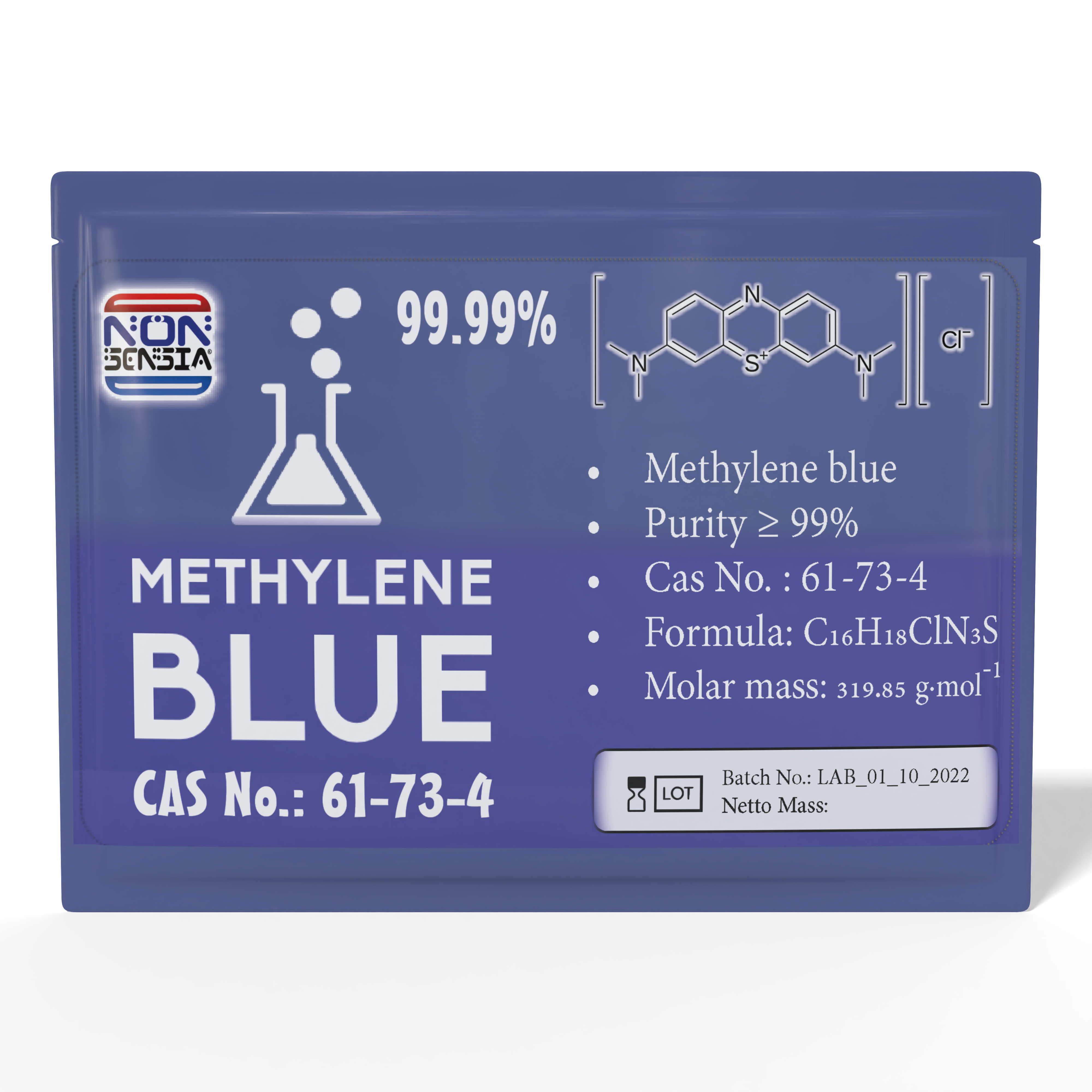
Methylene Blue – Analytical Reference Standard, 1000 mg | CAS 61-73-4
19,27 zł
Methylene Blue (Methylthioninium Chloride) Reference Standard — CAS 61-73-4, C16H18ClN3S
Phenothiazinium dye supplied for identity confirmation, method development and reagent-grade use in methods that produce a number. Laboratory reagent and analytical reference material only — not for human or animal consumption, and not a medicinal product, even though this molecule is the active substance of an authorised medicine in Poland, the European Union and the United States.
- Read this first: a purity percentage on a thiazine dye is underdetermined on three axes at once — per cent of which mass (anhydrous or hydrate), purity by which assay (dye content or chromatographic area), and absorbance under which conditions
- The 16.9 % question: anhydrous chloride 319.85 g·mol−1 versus trihydrate 373.90. One thousand milligrams of trihydrate is 855.4 mg of anhydrous-equivalent salt. Each form has its own CAS number, its own registry record and its own toxicology dataset; a pentahydrate has a solved crystal structure
- CAS / CID / UNII / ATC: 61-73-4 (anhydrous) · PubChem 6099, trihydrate 104827, cation 4139 · 8NAP7826UB · V03AB17 and V04CG05
- Formula / mass: C16H18ClN3S · 319.85 g·mol−1 · monoisotopic 319.0909965 Da · InChIKey
CXKWCBBOMKCUKX-UHFFFAOYSA-M - The azure problem: successive demethylation gives azure B, azure A, azure C and thionine. The azure B content of commercial samples was measured and published in 1979, and azure B is both an impurity and a metabolite — and it inhibits acetyl- and butyrylcholinesterase in its own right
- Why the strong chromophore is a trap: every phenothiazinium relative is blue and absorbs in the same region, so colour constrains the family and does not select the member. Separation with mass detection does
- Photometry is not linear: a concentration-dependent monomer–dimer–aggregate equilibrium deflects Beer’s law. The registry itself carries 668 and 688 nm for the same trihydrate; the pharmacopoeial purity assay reads at 663 nm
- Appearance: the solid is dark green with a bronze lustre. Only the solutions are blue
- Data gaps: no density, no boiling point, no refractive index and no experimental partition coefficient on the registry record; no 13C NMR, no 2D NMR, no MS/MS and no Raman on either hydrate record. A proton spectrum exists, but it is filed against the trihydrate
- Stereochemistry: achiral — zero in all four stereodescriptor counters, on all three registry records
- Hazards and status: Danger, H302 (91.6 %), H318 (25.6 %), H412 (10.3 %) from 273 company reports out of 18 notifications, with 8.1 % reporting no GHS hazard at all and no harmonised EU classification. No E number; C.I. 52015 is a dye index, not a food authorisation. Not scheduled in Poland, not on the 2026 anti-doping list
Weighed 1000 mg, single lot, with documentation stating the form supplied, the assay method and the conditions of any measurement quoted. Full registry data, the hydrate arithmetic, the dye-purity analysis, published method templates and 36 cited sources are set out below.
Quick Payment
100% New
Fast Delivery
- Additional Information
Product classification — read before ordering. This item is a chemical reagent and analytical reference material. It is not a medicinal product, dietary supplement, food, feed, novel food or cosmetic, and it is not intended for human or animal consumption or for any in-vivo administration whatsoever. It is supplied exclusively to laboratories, research institutions and professional users for in-vitro analytical, chromatographic and method-development work. Scientific findings summarised on this page describe substances investigated in published laboratory and clinical research; they are reported here as bibliographic facts about that literature and are not product claims, dosage guidance, or a recommendation of any use of this reagent.
A purity percentage on a thiazine dye is underdetermined on three independent axes at once. Read sections 3, 4 and 6 before ordering. First, per cent of what mass: the anhydrous chloride is 319.85 g·mol−1 and the trihydrate is 373.90, a 16.9 % difference, and each form carries its own CAS number, its own registry record and its own toxicology dataset [1][2][35][36]. Without a water determination, a weighed 1000 mg does not convert into a molar concentration. Second, purity measured how: historical dye assays report dye content, which is not chromatographic purity, and the classic measurements of azure B in commercial methylene blue were made precisely because commercial material was not homogeneous [14][15]. Azure B is at once a synthesis-related impurity and a metabolite, and it is pharmacologically active in its own right [20]. Third, the photometric check is not linear: methylene blue sits in a concentration-dependent monomer–dimer–aggregate equilibrium [23][24][25], so one molar absorptivity does not describe the system outside a narrow concentration window — and the registry itself carries 668 and 688 nm for the same trihydrate, while the pharmacopoeial purity assay is read at 663 nm [1][10]. The intense chromophore makes the measurement easy. It does not make it decisive.
Key facts
- Substance
- Methylene blue; international nonproprietary name methylthioninium chloride; 3,7-bis(dimethylamino)phenothiazin-5-ium chloride
- CAS (anhydrous)
- 61-73-4 — the number this page describes [1]
- CAS (trihydrate)
- 7220-79-3 — a different registry object with a different mass [2][35]
- PubChem CID
- 6099 anhydrous chloride; 104827 trihydrate; 4139 cation alone [1][2][3]
- EC number
- 200-515-2, plus list number 686-172-3; ECHA registry entry 100.000.469 [4]
- UNII
- 8NAP7826UB
- Colour Index
- C.I. 52015, Basic Blue 9 — a dye index number, not a food-additive authorisation
- ATC
- V03AB17 antidotes and V04CG05 diagnostic agents; veterinary QV03AB17, QV04CG05 [5]
- Formula
- C16H18ClN3S for the anhydrous salt
- Molecular mass
- 319.9 g·mol−1 as registered; 319.85 recomputed from atomic masses [1]
- Monoisotopic mass
- 319.0909965 Da; the exact mass is the identical figure [1]
- InChIKey
CXKWCBBOMKCUKX-UHFFFAOYSA-Manhydrous salt; trihydrateXQAXGZLFSSPBMK-UHFFFAOYSA-M; cationRBTBFTRPCNLSDE-UHFFFAOYSA-N- Stereocentres
- Zero in all four registry counters, in all three records — quoted verbatim in section 7
- Computed descriptors
- TPSA 43.9 Å2 · donors 0 · acceptors 4 · rotatable bonds 1 · heavy atoms 21 · complexity 483 · covalently bonded units 2, which is the registry saying this is a salt · XLogP3 not computed for the salt; the free cation carries 2.2 [1][3]
- Appearance
- Dark green crystals or powder with a bronze lustre; only the solutions in water or alcohol are deep blue [1]
- Water solubility
- 43 600 mg·L−1 at 25 °C [1]
- Melting point
- 100–110 °C with decomposition on the anhydrous record; the trihydrate record carries 374 °F, that is 190 °C, also with decomposition — see section 9 [1][2]
- Density, boiling point
- No experimental value in the registry — the property branch does not exist (section 9)
- GHS
- Danger — H302 at 91.6 %, H318 at 25.6 %, H412 at 10.3 %, aggregated from 273 company reports arising from 18 notifications; 8.1 % of those reports state the substance does not meet GHS criteria [1][4]
- Harmonised classification
- None — the ECHA substance record carries no Annex VI index number (section 11) [4]
- Regulatory status
- Authorised medicine in Poland and the European Union as Proveblue, centralised procedure, and in the United States as ProvayBlue for acquired methaemoglobinaemia; no E number; not on the 2026 anti-doping list; not in the Polish controlled-substance schedules [5][6][7][9]
- Supplied quantity
- 1000 mg, single lot, with lot documentation stating the form supplied and the assay method used (section 15)
On this page
- What this material is
- Identity and registry codes
- Three records, three masses
- What a purity figure on a dye does not say
- The chromophore is not an identity test
- Why photometry at the absorption maximum is not linear
- Structure and stereochemistry
- Methods that work and methods that fail
- Physicochemical data, with the disagreements left visible
- Spectra: what is deposited, what is missing
- Hazard classification and how broad its basis is
- Regulatory status
- What the literature is about
- Handling and storage
- What we certify and what we do not
- Terms of supply
- Questions and answers
1. What this material is
This page describes methylene blue supplied as an analytical reference material and laboratory reagent: a weighed quantity of a single identified substance, intended as the point of comparison against which another sample is measured, or as the defined-quality reagent in a method whose output is a number.
That second role is what makes this compound unlike most of the catalogue. Methylene blue is not only an analyte; it is an instrument. It is the colour-forming reagent in the classical spectrophotometric determination of sulfide in water [33] and in current work on sulfane sulfur [32]; it is a redox indicator, blue in the oxidised state and colourless as the reduced leuco form; it is a photoredox catalyst in synthetic photochemistry [25]; and it is a constituent of the Romanowsky stains on which a century of haematological diagnosis rests [19]. In each of those roles the number produced at the end depends on the quality of the dye at the beginning, and a reagent that is part water and part azure dyes does not fail loudly. It produces a slightly wrong slope, indefinitely.
The compound is also, separately, an authorised medicinal substance — in Poland and across the European Union as Proveblue and in the United States as ProvayBlue, indicated for acquired methaemoglobinaemia [6]. Nothing offered here is that medicine. The material on this page is a laboratory chemical, supplied on the terms in section 16.
Three things decide whether a given bottle of methylene blue can serve either purpose, and none of the three is settled by a percentage printed on a label. Which hydrate is in the bottle determines what a weighed mass means (section 3). How the purity was assayed determines whether the closely related azure dyes were counted as impurity or silently folded into the result (section 4). At what concentration and wavelength the absorbance was read determines whether a photometric check means anything at all (section 6). Those are three specific fields on a certificate, and they are exactly the three that a technical-grade dye supplier has no reason to fill in.
The terms on which this and every other reference material here is supplied are collected in the reference standards category.
2. Identity and registry codes
| INN | Methylthioninium chloride |
|---|---|
| Common names | Methylene blue; methylthioninii chloridum; tetramethylthionine chloride; Swiss blue; solvent blue 8 |
| CAS Registry Number | 61-73-4, anhydrous. The trihydrate is 7220-79-3 and is a separate registry object |
| Superseded CAS numbers | Eleven deprecated numbers sit on the record, among them 1341-90-8, 12262-49-6, 6476-03-5 and 97130-83-1 — the last listed as deprecated and simultaneously present as a current identifier [1] |
| Related CAS numbers | 150645-86-6 for poly(methylene blue) and 39612-13-0 for the dimer — distinct substances, not synonyms |
| EC number | 200-515-2, plus list number 686-172-3 [4] |
| ECHA registry entry | 100.000.469, record name Methylthioninium chloride [4] |
| PubChem CID | 6099 [1] |
| UNII (FDA) | 8NAP7826UB |
| ChEBI | CHEBI:6872 |
| ChEMBL | CHEMBL405110 anhydrous, and CHEMBL550495 |
| DrugBank | DB09241 |
| KEGG | C00220 |
| DSSTox | DTXSID0023296 anhydrous. The trihydrate has its own identifier, DTXSID0025600 [36] |
| NCI Thesaurus | C644 and C175730 |
| Wikidata | Q422134 |
| Colour Index | C.I. 52015; C.I. Basic Blue 9 |
| Customs tariff | HTS 3204.13.45.00, synthetic organic colouring matter, basic dyes |
| Absent from the record | No HMDB accession, no Nikkaji number, no MDL number — established by inventory of all 32 identifier headings, not by text search [1] |
| IUPAC, computed | [7-(dimethylamino)phenothiazin-3-ylidene]-dimethylazanium chloride |
|---|---|
| IUPAC, ECHA record | 3,7-bis(dimethylamino)-5λ4-phenothiazin-5-ylium chloride |
| SMILES | CN(C)C1=CC2=C(C=C1)N=C3C=CC(=[N+](C)C)C=C3S2.[Cl-] |
| Isomeric SMILES | Character-for-character identical to the above — an independent confirmation that the record carries no stereochemical layer |
| InChI | InChI=1S/C16H18N3S.ClH/c1-18(2)11-5-7-13-15(9-11)20-16-10-12(19(3)4)6-8-14(16)17-13;/h5-10H,1-4H3;1H/q+1;/p-1 |
| InChIKey | CXKWCBBOMKCUKX-UHFFFAOYSA-M |
| Computed descriptors | TPSA 43.9 Å2 · donors 0 · acceptors 4 · rotatable bonds 1 · heavy atoms 21 · complexity 483 · formal charge 0 · isotope atom count 0 · covalently bonded units 2 |
Two rows carry more weight than they look. Covalently bonded units: 2 is the registry stating in its own vocabulary that this is a salt — an organic cation and a chloride ion, not one covalent molecule. Everything in section 3 follows from that single integer. And the identity of SMILES and isomeric SMILES is the machine-readable way of saying that there is no stereochemistry to record, which section 7 then confirms from the four stereodescriptor counters.
One naming point deserves its own paragraph, because it is the shortest route to the wrong substance. C.I. 52015 is a Colour Index number. It identifies a dye in the index of colouring matters used by the textile, ink and staining trades. It is not a food-additive authorisation, it is not an E number, and it says nothing about pharmacopoeial quality. Methylene blue has no E number; figures resembling one circulate in commercial listings and appear to be garbled renderings of the Colour Index number. The blue food colours in the European system are E131 Patent Blue V, E132 indigotine and E133 Brilliant Blue FCF, and this substance is none of the three. The nomenclature of the methylene blue, azure and violet family has been confused for more than a century, and has been reviewed as such [18] — which is the practical reason to anchor identity on CAS number and InChIKey rather than on a trade name or a colour name.
3. Three records, three masses
Ask a registry for methylene blue and you are answered by three different objects, each with its own molecular formula, its own mass and its own hash key. They are not three descriptions of one thing. They are three things, and a quantity weighed out on a balance belongs to exactly one of them.
| Form | Formula | Molecular mass | Monoisotopic mass | InChIKey |
|---|---|---|---|---|
| Anhydrous chloride, CID 6099, CAS 61-73-4 | C16H18ClN3S | 319.9 (319.85 recomputed) | 319.0909965 Da | CXKWCBBOMKCUKX-UHFFFAOYSA-M |
| Trihydrate, CID 104827, CAS 7220-79-3 | C16H24ClN3O3S | 373.90 | 373.1226905 Da | XQAXGZLFSSPBMK-UHFFFAOYSA-M |
| Cation alone, CID 4139 | C16H18N3S+ | 284.40 | 284.12214376 Da | RBTBFTRPCNLSDE-UHFFFAOYSA-N |
The arithmetic that follows is the whole of the problem. The trihydrate is heavier than the anhydrous salt by a factor of 373.90 / 319.85 = 1.1690, which is 16.9 %. One thousand milligrams of the trihydrate contains 855.4 mg of anhydrous-equivalent salt, and 760.6 mg of the cation that actually carries the colour and the redox chemistry. A calibration curve prepared by weighing trihydrate and calculating with the anhydrous mass is wrong by nearly a fifth, in a direction that looks entirely plausible on the plot.
The hydration is not a bookkeeping quirk; it is a structural fact with three independent registry traces. The trihydrate holds a distinct CAS number, 7220-79-3 [2][35]. It holds a distinct DSSTox identifier, DTXSID0025600, and its own toxicology programme dataset separate from the anhydrous record [36]. And a pentahydrate has a solved single-crystal structure published in 1973 [12] — so at least three hydration states of this salt are on the public record. The ECHA substance record for EC 200-515-2 quietly makes the same point from another direction: among the IUPAC names it carries for one entry is bleu de methylene pentahydrate, sitting alongside the anhydrous names [4]. Several hydration states, one regulatory identity.
Why the name on the bottle does not settle it
Salt and solvate ambiguity is not unique to this compound, but methylene blue is unusually bad at signalling which form it is. Where a product is called procaine hydrochloride, the counter-ion is written into the name and no one calculates with the free base by accident. Where a compound is normally traded as a specific salt, as with sildenafil and its citrate, the mass difference is large enough that the convention is fixed and visible. Here the same word, methylene blue, is applied indifferently to the anhydrous chloride, to the trihydrate, to material of unstated water content, and in older commercial practice to the zinc chloride double salt — a form named in the manufacturing description on the registry record itself [1] and central to an entire series of measurements on commercial samples [14]. The registry even notes plainly that the substance forms double salts.
Water content is therefore a specification field, not a footnote. The comparison worth making inside this catalogue is alpha-GPC, where hygroscopicity is the first thing anyone handling the material learns and where a mass without a water figure is understood to be provisional. Methylene blue is the same problem wearing a more confident label: the dye looks stable, dry and definite, and the difference between its hydrates is nonetheless larger than most impurity specifications.
What to require on a certificate, in one line. The form supplied (anhydrous, trihydrate or stated water content), the method by which the water was determined (Karl Fischer titration or thermogravimetry), and the basis on which the assay percentage is expressed (as the anhydrous salt, as the hydrate as weighed, or as dye content). Three fields. Without them, a molar concentration derived from a weighed mass is an estimate with a 17 % span.
4. What a purity figure on a dye does not say
Dyes carry a measurement tradition of their own, and it does not line up with the one used for reference standards. The traditional figure is dye content: the fraction of the powder that is colouring matter, determined by titration or by absorbance against a reference. Dye content says nothing about which colouring matter. A sample can be 98 % dye and still contain several dyes.
For this particular dye that gap is occupied by a specific, named family. Successive demethylation of methylene blue gives azure B (trimethyl), azure A (dimethyl), azure C (monomethyl) and finally thionine; the related methylene violet belongs to the same chemical and nomenclatural cluster [18]. These compounds are produced during synthesis, they are produced on storage, and they are produced in vivo as metabolites. They are also, unhelpfully for anyone hoping to separate concerns, the intended constituents of the Romanowsky stains, where the ratio of methylene blue to azure B is the parameter that makes the stain work [19].
The strongest single piece of evidence that commercial methylene blue is not a homogeneous material is a direct measurement, and it is nearly fifty years old. Lillie and Donaldson measured the azure B content of commercial samples of zinc chloride methylene blue and published it as such [14]. In a companion paper the same group described the preparation of low-azure-B material from commercial medicinal methylene blue by hot acid dichromate oxidation [15] — a procedure that exists only because material already sold as medicinal grade carried enough azure B to need removing. A decade and a half earlier, Nerenberg and Fischer had published preparative separations of thionine, azure A, azure B and methylene blue from one another [16], which is the same statement made from the other end: these substances travel together and have to be taken apart deliberately.
The azures are not inert ballast. Azure B inhibits acetylcholinesterase and butyrylcholinesterase in its own right, and it is at the same time a metabolite of methylene blue [20]. That combination is the hardest possible case for an impurity specification: the same species that must be limited in the vial is also the species expected to appear downstream in any biological experiment, so its presence cannot be dismissed as irrelevant and cannot be attributed unambiguously to one origin.
The certification that does exist
There is an established scheme for exactly this problem, and it is worth knowing about before comparing suppliers. The Biological Stain Commission operates a certification programme in which submitted dye lots are assayed and tested for performance, and certified lots carry the Commission’s mark with a lot number; the analytical procedures used have been published in the open literature [17]. A Commission-certified lot answers a question about staining performance and dye composition. It is not the same question as chromatographic purity for a reference standard, and neither is it the same question as compliance with a pharmacopoeial monograph, which fixes identity tests, an assay and specified limits. Three different certificates, three different meanings, all of them legitimately describing “methylene blue”.
| Grade or claim | What is measured | What it does not settle |
|---|---|---|
| Technical or industrial dye | Colour strength against a working reference; often nothing else | Identity of the colouring matter, water content, inorganic residue, heavy metals |
| Biological stain, Commission-certified | Dye content and staining performance by published procedures [17] | Chromatographic purity expressed as area per cent; the exact water content of the lot |
| Pharmacopoeial grade | Identity, assay and specified impurity limits against a monograph [10] | Nothing about a lot sold outside that monograph — the claim is only as good as the named monograph and lot number |
| Bare percentage on a listing | Undefined without a stated method | Everything above |
This is why a purity number is only half a specification anywhere in this catalogue. On modafinil the qualifier by HPLC is doing real work, because it names an area-per-cent measurement with a separation behind it. On a dye the same bare number can mean dye content, and dye content is compatible with several dyes at once. And where a substance has a pharmacopoeial monograph in wide use — paracetamol is the obvious example — the monograph, not the supplier, defines what the assay means. For methylene blue, monographs exist [10] and the registry itself records the pharmacopoeial identity and purity procedures: infrared absorption against a reference for identity, and visible absorption spectrophotometry at 663 nm against standards for chemical purity, alongside an older titrimetric assay for the substance in drug matrices [1].
5. The chromophore is not an identity test
Most compounds in this catalogue are difficult to detect. This one is the opposite: a deeply coloured cation with an absorption maximum in the red, visible to the eye at micromolar concentrations and quantifiable on any visible-range photometer. The temptation that follows is to treat colour as identity. It is not.
Every member of the phenothiazinium family absorbs in the same region and looks blue in solution: azure A, azure B, azure C, thionine, toluidine blue O, methylene violet. They differ by degrees of N-methylation on the same tricyclic core, and each successive demethylation shifts the maximum by tens of nanometres, not hundreds. A visible spectrum therefore constrains the family and does not select the member — and this is precisely the family that co-occurs with methylene blue in real samples for the reasons set out in section 4.
| Observation | What it proves | What it leaves open |
|---|---|---|
| Deep blue solution | A thiazine or related polymethine chromophore is present | Which one, and in what proportion |
| Absorbance maximum near 660–670 nm | Consistent with the tetramethyl member | Azure B overlaps substantially; mixtures shift the apparent maximum |
| Absorbance ratio at two wavelengths | Sensitive to composition — useful as a screen | Confounded by the dimer band (section 6), so it is not diagnostic on its own |
| Chromatographic separation with mass detection | Resolves methylene blue from azure A, B and C and identifies each by mass [21] | Requires a reference for each species to be quantified |
| Infrared absorption against a reference | Pharmacopoeial identity test [1] | Requires an authentic reference spectrum of the same solid form |
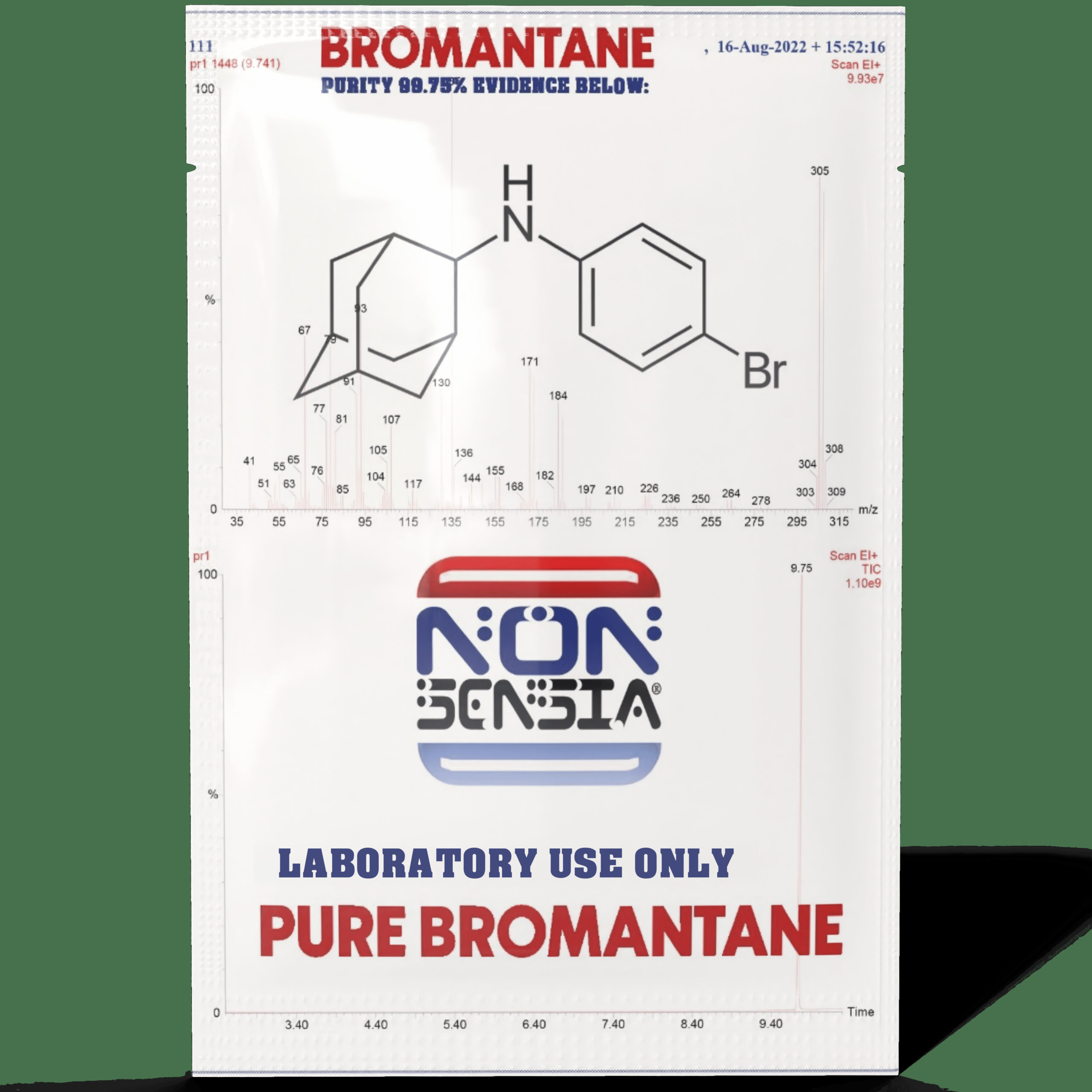
The catalogue supplies two useful contrasts here. For bromantane a single halogen isotope pattern settles identity from a mass spectrum with no chromatography at all — the molecule announces itself. For mebicar the opposite extreme holds: no useful chromophore, no ionisable group, nothing for a conventional detector to see. Methylene blue is the third case, and the least intuitive one. It is trivially detectable and stubbornly hard to confirm, because everything it is likely to be confused with is equally visible and equally blue.
6. Why photometry at the absorption maximum is not linear
The second trap follows directly from the first. Having decided to quantify a strongly absorbing dye by absorbance, an analyst reaches for a molar absorptivity and Beer’s law. For methylene blue that relationship holds only in a narrow window, and it fails in a way that produces smooth, believable, wrong numbers.
Methylene blue self-associates in solution. The monomer band near 664 nm is accompanied by a dimer band near 610–615 nm, and the ratio between them changes with concentration. The kinetics of the monomer–dimer equilibrium in water were characterised by flash methods in 1979 [23]; the same equilibrium has since been shown in alcohols, with dimers and higher aggregates and a critical aggregation concentration determined separately for methanol, ethanol, propanol and butanol [24]; and the aggregation state has been shown to change the compound’s behaviour as a photoredox catalyst, which is a functional consequence rather than a spectroscopic curiosity [25]. Ionic strength, temperature and the presence of surfactants or polyanions all shift the equilibrium further.
The practical consequence. A dilution series of methylene blue does not give a straight line through the origin over a wide range, because the fraction of dye present as monomer changes as you dilute. An absorptivity determined at one concentration does not transfer to another, and a two-wavelength ratio taken as a purity indicator moves with dilution even for perfectly pure material. Any absorbance figure quoted for this compound is meaningless without the concentration, solvent, ionic strength, temperature, path length and wavelength at which it was measured.
Nor is there a single authoritative wavelength to anchor on. The registry record carries “Absorption max: 668, 609 nm” in one entry and “UV absorption maxima 688 and 609 nm” in another, both attributed to the same trihydrate [1]. The pharmacopoeial purity procedure reads at 663 nm [1][10]. That is three different numbers for the position of one band, inside sources a laboratory would reasonably treat as authoritative. We report the disagreement rather than choosing a value, because choosing one would hide exactly the thing a buyer needs to know.
We do not print a molar absorptivity on this page for the same reason. A single figure without the conditions attached would be a number that fails silently, and we could not verify a primary value under stated conditions to the standard the rest of this page is held to. The comparison inside the catalogue is instructive: for apigenin, a flavone with a well-behaved ultraviolet spectrum, an absorptivity travels reasonably well between laboratories because the molecule does not stack appreciably at working concentrations. For a cationic dye that dimerises, it does not.
7. Structure and stereochemistry
The molecule is a planar tricyclic phenothiazinium cation: a central thiazine ring flanked by two benzene rings, with a dimethylamino group at position 3 and another at position 7, and the positive charge delocalised across the conjugated system. The chloride ion balances it. That planarity is the structural reason for the stacking described in section 6, and modern crystallography of a zinc chloride complex of the dye makes the π–π interaction explicit [13].
The stereochemistry is stated by the registry without ambiguity. Quoted verbatim, for all three records [1][2][3]:
| Defined atom stereocentre count | 0 |
|---|---|
| Undefined atom stereocentre count | 0 |
| Defined bond stereocentre count | 0 |
| Undefined bond stereocentre count | 0 |
| Isotope atom count | 0 |
| Covalently bonded units | 2 — cation and chloride |
The compound is achiral. There are no enantiomers, there is no optical rotation to specify, chiral chromatography has nothing to resolve, and any claim about a dextrorotatory or laevorotatory methylene blue is false by construction. Two independent confirmations sit alongside the counters: the isomeric SMILES is identical to the canonical SMILES, and the middle block of the InChIKey is UHFFFAOYSA in all three records, which is the standard hash for a structure with no stereochemical layer.
This is worth stating plainly because it removes a whole class of specification that other products in this catalogue genuinely need. Tadalafil carries two defined stereocentres and therefore four stereoisomers of identical exact mass, and for that compound the certificate has to say which one is in the vial. Here the certificate has nothing to say on the subject, and a supplier who volunteers an enantiomeric purity figure for methylene blue is describing something that does not exist. The specification burden for this substance sits entirely on form, water and dye composition instead.
8. Methods that work and methods that fail
The descriptors point at the method before any experiment does. This is a permanent cation with a formal positive charge delocalised over the ring system, no hydrogen-bond donors, four acceptors, one rotatable bond and a computed partition coefficient of 2.2 for the free cation [3]. It is not a neutral molecule whose retention can be tuned with mobile-phase pH, and it is not a weak base that can be switched between forms. It is charged at every pH, and it sticks to things.
| Technique | Verdict | Reason |
|---|---|---|
| Reversed-phase HPLC with visible detection | Works, with care | The chromophore makes detection trivial; the difficulty is the separation from azure A, B and C, and peak tailing from interaction with residual silanols on the stationary phase |
| HPLC coupled to tandem mass spectrometry | The reference approach | A published method resolves and quantifies methylene blue together with azure A, B and C on a C18 column of 150 × 2.1 mm and 5 µm particles, validated to the criteria of Commission Decision 2002/657/EC [8], linear over 1–500 µg·L−1 [21]. A second published method reports a limit of quantification of 0.5 µg·kg−1 and recoveries of 73.0–108.3 % in a food matrix [22] |
| Ion-pair or ion-exchange chromatography | Viable alternative | A permanent cation is a natural fit; useful when silanol interaction spoils peak shape on plain reversed phase |
| Adjusting retention with mobile-phase pH | Fails | The charge is structural, not the result of protonating a basic centre; pH does not switch it off |
| Gas chromatography | Poor fit | An ionic salt that decomposes at 100–110 °C is not a candidate for volatilisation, although a GC-MS reference spectrum does exist in the deposited data (section 10) [1] |
| Visible spectrophotometry for purity | Works only under stated conditions | The pharmacopoeial procedure fixes the wavelength at 663 nm against reference standards [1][10]; without fixed concentration and conditions the aggregation equilibrium of section 6 makes the reading drift |
| Infrared absorption against a reference | Standard identity test | Recorded as the pharmacopoeial identity procedure [1]; requires an authentic reference spectrum of the same solid form |
| Titrimetry | Classical, still specified | A titrimetric assay for the substance in drug matrices is recorded among the analytical methods on the registry record [1] |
| Thin-layer chromatography of the azures | Useful and cheap | The historical separations of thionine and the azures were preparative and chromatographic [16]; a plate will show a multi-component dye immediately, before any instrument is booked |
| Karl Fischer titration or thermogravimetry | Not optional | The only way to convert a weighed mass into a molar quantity, given section 3 |
Two practical warnings that do not fit in a table. First, this dye adsorbs onto surfaces — glass, plastic, filter membranes, tubing and column frits — and at trace concentrations the loss is not negligible; standards prepared in a glass volumetric flask and transferred through a syringe filter can arrive at the detector visibly weaker than intended. Second, it is a redox indicator, so it participates in the chemistry of its own sample: mild reducing agents convert it to the colourless leuco form, and the colour returns on exposure to air. Anything that reduces it — ascorbate, thiols, dithionite, some biological matrices — will quietly change an absorbance reading. That is the reverse of the situation for L-DOPA, where the analyte oxidises visibly and the analyst learns to protect it; here the colour change runs in the other direction and can be mistaken for dilution error.
9. Physicochemical data, with the disagreements left visible
Methylene blue has been in continuous industrial and clinical use since the 1870s, so the natural expectation is a complete and settled set of constants. The registry does not deliver one. Some quantities are recorded several times with different values; others have no entry at all. Below is what exists, attributed per value, with the contradictions left in place.
| Property | Value as recorded | Qualification |
|---|---|---|
| Physical description | Dark green crystals or powder with a bronze-like lustre; solutions in water or alcohol are deep blue | The solid is green, not blue. A blue powder is a signal to ask what else is in it, or how finely it is milled |
| Colour and form | “Dark green crystals or powder from chloroform-ethyl ether”, and separately “solutions have a deep blue color” for the zinc-free dye. A further entry elsewhere on the record describes a crystalline powder with a bronze-like lustre for the zinc salt | Two branches of the record, not one: the colour-and-form branch names the recrystallisation solvent pair, while the zinc-salt description sits among the other experimental properties. The zinc chloride double salt is a distinct commercial form (section 4) |
| Odour | Three renderings on one record: the odour branch says “slight odor”; among the other experimental properties one entry says “odorless” and another “odorless or slight odor” | A minor disagreement inside a single record, reported rather than resolved. Both of the latter two entries are tagged to the trihydrate |
| Melting point, anhydrous record | 100 to 110 °C with decomposition — two separate entries agreeing | It decomposes rather than melts cleanly; this is not a usable identity criterion |
| Melting point, trihydrate record | 374 °F, that is 190.0 °C, with decomposition, attributed to a 1992 national toxicology compilation [2] | Eighty degrees apart from the anhydrous record, for two forms of the same substance in the same database |
| Water solubility | 43 600 mg·L−1 at 25 °C | The one quantitative solubility figure on the record |
| Other solubilities | One entry: soluble in ethanol and chloroform, slightly soluble in pyridine, insoluble in diethyl ether. A second entry reads, verbatim, “Soluble in glacial acetic acid and glycerol; insoluble in xylene and oleic acid, in ethanol 2%, and in acetone 0.5%” | Qualitative statements from different compilations, and the second is ambiguous as written: the percentages sit inside an insoluble in clause, so whether 2 % and 0.5 % are solubilities or limits of insolubility is not resolvable from the record. It is quoted here rather than paraphrased, and it disagrees with the first entry, which calls the substance soluble in ethanol |
| Vapour pressure | 1.3 × 10⁻⁷ mmHg in the properties section; 7.0 × 10⁻⁷ mmHg at 25 °C in the environmental-fate narrative | The second figure is explicitly an estimate from a fragment-constant method, not a measurement. Both are far below any practical relevance for an involatile salt |
| Stability | The stability branch reads “stable under recommended storage conditions”; “stable in air” appears separately, in entries tagged to the trihydrate | Stability of the solid; solutions are a separate question (section 14) |
| Decomposition | On heating to decomposition emits toxic fumes of nitrogen oxides, sulfur oxides and chlorides | Directly relevant to disposal and to any thermal analysis |
| Density | No entry. The property branch does not exist on the record | Established by inventory of every experimental-property heading, not by text search. The only occurrence of the word on the record is current density in an electrochemical passage. Figures around 1.7 g·cm−3 circulate in commercial listings; they are not registry values |
| Boiling point | No entry — and none is expected for a salt that decomposes on heating | Any quoted boiling point for this compound should be treated as unsourced |
| Refractive index, experimental logP | No entry in either case | The computed partition coefficient exists only for the free cation, at 2.2 [3] |
Dissociation constants: the values are real, but they are not where they look
The dissociation-constant section of the record appears at first to be empty: it holds two pointers to an external compilation rather than inline numbers. Followed through, that compilation returns three experimental values, each with a temperature, a method and a primary citation:
| Value | Conditions and method | Primary source |
|---|---|---|
| pKaH1 = 3.8 | 25 °C, measured as the hydrochloride, hydrogen-electrode measurements | Ray and Jung 1951 [27] |
| pKaH1 = −0.15 | 35.4 °C, ionic strength 0.2 in hydrochloric acid, Hammett acidity function | Ghosh 1970, cited in the same compilation |
| pKaH2 = 7.5 | Triplet excited state, determined by flash spectroscopy | Faure, Bonneau and Joussot-Dubien 1967 [26] |
Two observations follow. First, these constants describe protonation of the already cationic dye, not deprotonation of a neutral acid: the species carried in ordinary aqueous solution is the cation, and none of these equilibria offers a handle for controlling chromatographic retention at working pH. Second, the third value belongs to an excited state, which is a different physical object from the ground state and cannot be used interchangeably with it. A separate number, approximately 3.14, appears in the environmental-fate narrative on the same record; that one is explicitly labelled an estimate and should never be quoted as a measurement.
Compared with the emptier corners of this catalogue — chlodantane is the extreme case, where the registry holds almost nothing measured at all — methylene blue is data-rich. The difficulty here is the opposite one: there is enough data for two sources to disagree, and enough history for estimates to have been repeated until they look like measurements.
10. Spectra: what is deposited, what is missing
Deposited spectral data for this compound is unusually well attributed — instrument, technique, and in one case the catalogue and lot number of the sample measured. It is also unevenly distributed between the anhydrous and trihydrate records, which is worth knowing before searching for a reference spectrum and concluding that none exists.
| Technique | Present | Attribution recorded |
|---|---|---|
| GC-MS | Yes | Commercial spectral library, source of spectrum JA-7-737-0. The record names the branch and the library entry; it does not state the ionisation mode |
| Ultraviolet–visible | Yes | Entry “UV: 6-680” in a published compilation of organic electronic spectral data |
| FTIR | Yes | Coblentz Society collection, entry IR: 1372; instrument Bruker IFS 85; technique KBr pellet; sample from a named German manufacturer |
| ATR-IR | Yes | Bio-Rad FTS instrument; technique ATR film cast from chloroform; sample catalogue number A18174, lot 10138715 |
| 1H NMR | No on this record — see the trihydrate record below | — |
| 13C NMR | No — and absent from the trihydrate record as well | — |
| 2D NMR | No | — |
| MS/MS and LC-MS | No — the only mass spectrum deposited is the GC-MS one | — |
| Raman | No | — |
The trihydrate record carries spectra of its own, and they are different ones. A 1H NMR spectrum recorded on a Varian CFT-20 is deposited against the trihydrate record, CID 104827 — not against the anhydrous record [2]. The trihydrate also carries its own FTIR, measured as a KBr wafer on a differently sourced sample, and its own ATR-IR from a different supplier lot. A search that stops at the anhydrous record concludes that no proton spectrum exists for methylene blue. It does; it is filed under the other form. This is the same lesson as section 3 arriving through a different door: the two hydrates are separate objects in every database that holds them, and information filed against one is not surfaced by a query about the other.
What remains genuinely missing after both records are searched is worth stating precisely, because it defines what a well-characterised lot can add. There is no 13C NMR spectrum on either record, no two-dimensional NMR, no tandem mass spectrometry data and no Raman spectrum — established by enumerating every branch of the spectral sections rather than by keyword search, so this is an absence in the record, not a failure of the query. For a compound with this depth of literature, the gap in the free public record is real, and a lot accompanied by an assigned proton and carbon spectrum, a product-ion spectrum and a solid-phase infrared of the declared hydrate carries information that cannot simply be looked up.
One further caution about infrared identity. The pharmacopoeial identity test is infrared absorption compared with a reference [1], and the deposited infrared data was measured on a KBr pellet and on an ATR film cast from chloroform. Those are two different sample preparations, and neither is guaranteed to match a spectrum recorded on a different hydrate of the same salt. Comparing an ATR spectrum of your trihydrate against a KBr reference of anhydrous material and calling the differences instrument variation is a mistake this substance invites.
11. Hazard classification and how broad its basis is
| Signal word | Danger |
|---|---|
| Hazard statements | H302 harmful if swallowed, in 91.6 % of the company reports; H318 causes serious eye damage, 25.6 %; H412 harmful to aquatic life with long-lasting effects, 10.3 %. The record marks H302 at Warning level and H318 at Danger level |
| Precautionary statements | P264, P264+P265, P270, P273, P280, P301+P317, P305+P354+P338, P317, P330, P501 |
| Basis of the aggregate | 273 reports from companies, arising from 18 notifications. Hazard codes were provided by 16 notifications, covering 251 of the 273 reports |
| Dissent inside the aggregate | 22 of 273 reports, or 8.1 %, state that the substance does not meet GHS hazard criteria at all |
| Second, narrower ECHA block | A separate aggregation from 1 notification and 2 reports lists H302 and H318, each at 100 % — which here means two reports out of two |
| National classification, separate source | A Japanese national evaluation body lists H302, H361 suspected of damaging fertility or the unborn child, H370 and H372. This is a national regulatory classification carried alongside the ECHA aggregate; it has no ECHA notification counter attached and must not be read as one company’s opinion |
| Harmonised EU classification | None. The ECHA substance record for EC 200-515-2 carries no Annex VI index number [4] |
Read those rows together, because they say something more interesting than a single pictogram. This is a broad classification base by the standards of a research chemical — hundreds of company reports rather than the single filing that stands behind many catalogue substances. Breadth, however, is not unanimity. The percentages are fractions of the 273 company reports, not of the 18 notifications — 91.6 % of 18 would not be a whole number, while 91.6 % of 273 is the 251 reports the record itself names. Read that way they disagree substantially: barely a quarter of the reports carry the serious-eye-damage hazard that is the one classified at Danger level, one in ten carries the aquatic hazard, and roughly one in twelve asserts that the substance is not hazardous under GHS at all. A safety data sheet built from any one of those positions is defensible, and two suppliers can therefore hand you materially different documents for the same substance without either being wrong.
The absence of a harmonised classification was measured, not assumed. The ECHA substance record for methylthioninium chloride carries an empty index-number field; the same query against formaldehyde, a substance with a well-known Annex VI entry, returns index number 605-001-00-5 [4]. The instrument fires, so the empty field is a real absence. In practice this means no legally binding classification applies across the European Union, the notified classification is what suppliers have chosen to declare, and the national entry with the reproductive-toxicity statement should be read into your own risk assessment rather than ignored because it sits outside the ECHA aggregate.
12. Regulatory status
| Poland — medicinal product | Authorised. The national register returns exactly one record: Methylthioninium chloride Proveblue, active substance methylthioninii chloridum, 5 mg·mL−1 solution for injection, marketing authorisation holder Provepharm SAS, ATC V03AB17, registered through the centralised European procedure [6]. Control on the same query: a common analgesic returns 43 records |
|---|---|
| European Union | Authorised medicine, consistent with the centralised procedure recorded above; the product is the subject of a European public assessment report, and the compound is indexed as an approved human medicine in the registry record [1][6][11] |
| United States | Active ingredient of an approved drug product; the intravenous form is approved for the treatment of acquired methaemoglobinaemia in paediatric and adult patients, marketed as ProvayBlue [1]. Pharmacopoeial monographs exist, including one for veterinary injection [10] |
| United States, over-the-counter | The regulator has stated that for a list of ingredients offered without prescription, including this one, there are inadequate data to establish general recognition of safety and effectiveness [1] |
| Colour additive status | Listed as Ext. D&C Blue No. 1 under the colour-additive regulations at 21 CFR 81.30 with current use recorded as “None” and former use as external drugs and external cosmetics [1]. A colour additive whose permitted use is none is not a food colour by any reading |
| Food additive status | No E number exists. The record’s food-related entries are food-contact substances under 21 CFR 178.1010, that is sanitising solutions for food-contact surfaces, and an exemption from tolerance as a component of an antimicrobial pesticide formulation [1]. Those are the opposite of a food additive |
| Poland — controlled substances | Not scheduled in any narcotic, psychotropic or new-psychoactive-substance schedule [7]. Measured: one raw text hit, which on inspection is the phrase methylene group inside a generic structural definition of an unrelated class, therefore a false positive. Controls in the same document: the amphetamine stem returns 27 hits, cocaine 2 |
| Anti-doping, 2026 | Not listed by name [9]. Measured: six raw hits for the pattern methylene, and on inspection all six are methylenedioxy- compounds. Controls in the same document fire on bromantan, 2 hits, and modafinil, 4 hits. A raw counter without context inspection would have flagged this substance as a prohibited one |
| Aquaculture residues | Methylene blue and its azure metabolites are the subject of residue determination in aquatic products, using methods validated to the criteria of Commission Decision 2002/657/EC [8][21][22]. We report the analytical literature; we did not read the primary veterinary-medicines legislation ourselves |
| Customs classification | HTS 3204.13.45.00 — synthetic organic colouring matter, basic dyes [1] |
The regulatory profile of this substance is genuinely double, and both halves matter. It is an authorised medicinal substance under a centralised European authorisation, and simultaneously an industrial dye with a customs tariff heading and a colour-index number. Neither status transfers to a laboratory chemical: material supplied as a reagent is not a medicine, is not covered by anyone’s marketing authorisation, and carries none of the pharmacopoeial guarantees attached to a licensed product. Nor does the existence of a licensed injection make any grade of the dye suitable for anything other than laboratory use. The two statuses sit side by side, and the only correct reading of them is that the article you receive from us is the third thing: a reagent.
13. What the literature is about
The literature on methylene blue is enormous, and its size is a trap for anyone using publication counts as a proxy for how well a specific question has been studied. A bibliographic query on the name returns figures in the hundreds of thousands, dominated by work in which the dye is a model pollutant for adsorption and photocatalysis studies — papers about activated carbon and titanium dioxide, not about methylene blue itself. Filtered for the questions this page turns on, the picture inverts sharply: the core literature on the composition of commercial preparations is thin and old, centred on a series of papers published between 1963 and 1979 [14][15][16]. That combination — a vast literature that does not address the practical question, and a small old literature that does — is exactly why a modern, well-documented lot is worth something.
The strands below are described as facts about published work. They are not claims about this article and not a description of any use of it.
Structure and physical chemistry
The pentahydrate crystal structure was solved in 1973 [12]; a complex of the dye with zinc(II) chloride was characterised crystallographically in 2026, with the π–π stacking interactions described explicitly [13]. The self-association behaviour that section 6 rests on runs from kinetic work on the monomer–dimer equilibrium in water [23] through aggregation in alcohols [24] to the effect of aggregation state on photoredox catalysis [25]. The excited-state acid–base behaviour was studied by flash spectroscopy in 1967 [26], and ground-state protonation as early as 1951 [27].
Dye chemistry, staining and nomenclature
Preparative separation of thionine, azure A, azure B and methylene blue was published in 1963 [16]. The azure B content of commercial samples was measured in 1979 [14], and material of low azure B content was prepared from commercial medicinal-grade dye in 1978 [15]. The certification procedures used for biological stains have been published in full [17]. The nomenclature of the family has been reviewed as a subject in its own right [18], and the chemistry of Romanowsky staining has been reviewed recently from a chemical rather than a histological perspective [19].
Analytical chemistry
The most directly useful papers are two residue methods: a tandem mass spectrometry method that determines methylene blue together with azure A, B and C [21], and an earlier method reporting quantification limits and recoveries in the same matrix class [22]. Beyond residues, the compound appears throughout analytical chemistry as a reagent: the classical spectrophotometric determination of hydrogen sulfide in natural waters is the methylene blue method [33], and the technique remains in the current toolkit for sulfane sulfur [32].
Pharmacology and clinical literature
This strand is reported here strictly as bibliography, and it is the reason the framing of this page is laboratory-only rather than anything else. Published work establishes that the compound is a potent monoamine oxidase inhibitor [28]; a clinical case report describes serotonin syndrome following its administration during cardiac surgery [29]; a haematology note warns about haemolysis in the context of glucose-6-phosphate dehydrogenase deficiency [30]. Azure B, the principal related dye and metabolite, inhibits acetylcholinesterase and butyrylcholinesterase [20]. A 2022 review examines the compound as a diagnostic agent and medication and concludes that its basic toxicological characterisation remains incompletely established despite well over a century of use [31], and a review of its history and pharmacology sets that longevity in context [34]. Research-stage work under a development name investigated the compound’s effect on tau protein aggregation, which is why that name appears among the registry synonyms [1].
Two things follow for a laboratory. First, this is not an innocuous dye to be handled casually because it is old and familiar. Second, the interaction and deficiency issues in that literature belong to clinical practice with an authorised medicine, and are cited here to explain why the article on this page is supplied strictly as a reagent and not for any other purpose.
14. Handling and storage
| Personal protection | Nitrile gloves, safety glasses or goggles, laboratory coat. Weigh in a fume hood or under local exhaust. The dominant notified hazards are harmful if swallowed and serious eye damage [1][4], so the controlling risks are hand-to-mouth transfer and airborne fines reaching the eye |
|---|---|
| Risk assessment | Record that no harmonised European classification exists, that notifier agreement is partial, and that a national regulatory classification adds statements on reproductive toxicity and organ toxicity (section 11). Build the assessment on the union of those, not on the most convenient supplier sheet |
| Staining — the practical hazard | This is an intensely staining cationic dye. It colours skin, clothing, bench surfaces, balance pans and plastics, and it is difficult to remove from porous materials. Weigh over a disposable liner, keep a dedicated spatula, and expect anything it touches to stay blue |
| Temperature | Ambient, tightly closed container. The solid is recorded as stable in air and stable under recommended storage conditions [1]. Note that the solid decomposes rather than melting cleanly from around 100 °C, so drying at elevated temperature is not a safe way to remove water |
| Moisture | Store dry and closed. Water content is a specification parameter for this substance, not a nuisance variable (section 3): material that gains or loses water changes the meaning of every mass weighed from it |
| Light | Protect from light. The compound is photochemically active — it is used deliberately as a photoredox catalyst [25] — and prolonged illumination of solutions in the presence of reducing species is not a neutral condition |
| Solutions | Prepare fresh where possible and record concentration, solvent, ionic strength and storage conditions. Aggregation is concentration-dependent (section 6), so a stock solution and a working dilution are not simply scaled versions of one another. Reducing agents in the matrix convert the dye to the colourless leuco form [1], which reads as a loss of concentration |
| Adsorption losses | At trace levels, account for adsorption on glass, plastics, filter membranes and tubing. Pre-rinse filters and consider whether a syringe filter belongs in the calibration path at all |
| Thermal work | On decomposition the substance emits nitrogen oxides, sulfur oxides and chlorides [1]. Thermogravimetry to determine water content should be run with adequate extraction and a temperature programme that separates dehydration from decomposition |
| Waste | Halogen-containing organic chemical waste, in accordance with local regulations. Do not release to drains: one notified hazard concerns aquatic toxicity with long-lasting effects, and the compound is intensely visible at high dilution |
| Records | Archive whatever you measure on your own lot — water content, a carbon spectrum, a product-ion spectrum, a solid-phase infrared of the declared hydrate. Section 10 shows that several of those do not exist in the free public record for either form |
15. What we certify and what we do not
| Claim | Status |
|---|---|
| Chemical identity: CAS numbers, formula, masses, InChI, InChIKey, stereodescriptors, registry codes | Quoted from named registries [1][2][3][4], each identifier traceable to the record it came from |
| The three-form distinction and the 16.9 % mass difference | Arithmetic from registry masses, corroborated by three independent registry traces [2][35][36] and a solved hydrate crystal structure [12] |
| Physicochemical values in section 9 | Attributed per value, with internal disagreements shown rather than resolved. Where a figure is an estimate, it is labelled as one |
| Density, boiling point, refractive index, experimental partition coefficient | Not certified — no experimental value exists on the registry record. Figures for density circulating in commercial listings are not registry values |
| Molar absorptivity at the absorption maximum | Not asserted. No single value is valid across concentrations for a dye with this aggregation behaviour (section 6), and we did not verify a primary value under stated conditions |
| Regulatory statements in section 12 | Measured against named documents [6][7][8][9][11], each negative result checked with a positive control that fired in the same document |
| Absence of a harmonised EU classification | Measured on the ECHA substance record, with a positive control on a substance known to carry an Annex VI index number [4] |
| Literature in section 13 | Every claim carries a citation with a resolvable identifier; all cited works were checked for retraction, and none is retracted |
| Dye composition, azure content, grade distinctions in section 4 | Published measurements on commercial material of the period [14][15][16] plus published certification procedures [17]. These describe the substance class and the trade, not the lot supplied to you |
| Method suggestions in section 8 | Starting points and published templates, not validated procedures for your matrix. Validation is the user’s responsibility |
| Water content, hydrate form and purity of the lot supplied | Stated on lot documentation, with the method used — not asserted in catalogue copy, because a number without a named method is not a specification |
| Certification by a biological stain certification body | Not claimed. That is a separate scheme with its own mark and lot numbering [17]; if you require a certified stain lot, require the mark itself |
| Pharmacopoeial compliance | Not claimed. Monographs exist [10], and compliance is a statement about a specific lot tested against a specific monograph, which is not what a catalogue page can assert |
| Controlled-substance status in the United States | Not measured by us. We report the medicinal-product position only [1]; we measured schedules for Poland [7] and the 2026 anti-doping list [9] |
| Pharmacological claims | None made. Section 13 describes published research; that is a description of literature, not a property of this article |
16. Terms of supply
This material is supplied as a laboratory reagent and analytical reference material, for in-vitro laboratory use by qualified personnel in an appropriately equipped facility. It is not a medicinal product, not a dietary supplement, not a food, feed or cosmetic ingredient, not a food colour, and it is not supplied for administration to humans or animals in any form or by any route.
By ordering, the purchaser confirms that they are a professional user acquiring the material for laboratory purposes; that they will handle it in accordance with section 14 and their own institutional risk assessment; that they will not administer it to humans or animals, nor supply it to any person who intends to; and that they are responsible for compliance with all laws applicable at the destination. That last point deserves emphasis for this substance in particular, because the same molecule is an authorised medicine subject to pharmaceutical law in the same jurisdictions where it is also an ordinary industrial dye. The article supplied here is neither the medicine nor the industrial dye: it is a reagent, and the documentation that accompanies it describes the lot as such.
Nothing on this page is medical advice, nor an offer of a medicinal product. Statements in sections 12 and 13 describe medicines authorised elsewhere and the published research literature; they describe neither this article nor any use of it. The full terms applying to every reference material in this catalogue are set out in the reference standards category.
17. Questions and answers
- Which form am I buying, anhydrous or trihydrate?
- The lot documentation states the form and, where determined, the water content. This matters more here than for almost anything else in the catalogue: the anhydrous chloride is 319.85 g·mol−1 and the trihydrate is 373.90, so 1000 mg of trihydrate corresponds to 855.4 mg of anhydrous-equivalent salt. Calculating a molarity from a weighed mass without knowing the form introduces a 16.9 % error.
- Why do two CAS numbers appear for methylene blue?
- Because there are two substances. 61-73-4 is the anhydrous chloride; 7220-79-3 is the trihydrate, and it has its own registry record, its own environmental-database identifier and its own toxicology dataset [2][35][36]. Eleven further CAS numbers are carried on the anhydrous record as deprecated, so a supplier document quoting an unfamiliar number is not automatically wrong — but it needs checking against the record rather than being copied forward.
- Is a pentahydrate real, or is that a typographical error?
- Real. The pentahydrate has a single-crystal structure solved and published in 1973 [12], and the European substance record for this dye even carries a French pentahydrate name among its IUPAC name variants [4]. At least three hydration states of this salt are documented.
- What does a bare purity percentage on a dye actually mean?
- Without a stated method, very little. The historical dye figure is dye content, the fraction of the powder that is colouring matter, which is compatible with several different dyes being present at once. Chromatographic purity expressed as area per cent with a separation from azure A, B and C is a different and much more informative number. Ask which one the figure is, and against what method.
- What are the azures, and why do they matter?
- Azure B, azure A and azure C are successively demethylated relatives of methylene blue, ending at thionine. They arise in synthesis, on storage and as metabolites. The azure B content of commercial samples was measured directly in 1979 [14], and a procedure for lowering it in commercial medicinal-grade material was published the year before [15]. Azure B is not inert: it inhibits acetylcholinesterase and butyrylcholinesterase [20].
- Can I confirm identity from the visible spectrum?
- No, and this is the central analytical point about the compound. Every member of the phenothiazinium family — the azures, thionine, toluidine blue O, methylene violet — absorbs in the same region and looks blue. A visible spectrum constrains the family and does not select the member. Separation with mass detection does [21]; infrared against an authentic reference of the same solid form is the pharmacopoeial identity test [1].
- Which wavelength should I use?
- Whichever your method specifies, and state it. There is no single canonical figure: the registry carries 668 and 609 nm in one entry and 688 and 609 nm in another for the same trihydrate, while the pharmacopoeial purity procedure reads at 663 nm [1][10]. Report the wavelength, the concentration, the solvent, the temperature and the path length with any absorbance you quote.
- Why is my calibration curve not linear?
- Because the dye dimerises, and the fraction present as monomer changes as you dilute. The monomer band near 664 nm and the dimer band near 610 nm shift in relative intensity with concentration; the equilibrium has been characterised kinetically in water [23] and shown to extend to dimers and higher aggregates in alcohols [24], and the aggregation state even changes the compound’s catalytic behaviour [25]. Work within a narrow, stated concentration range, or model the equilibrium.
- Do you supply a molar absorptivity?
- No. A single figure without conditions attached would fail silently for exactly the reason in the previous answer, and we do not print numbers we cannot attribute to a primary measurement under stated conditions. Determine it on your own material, at your own working concentration, and record the conditions alongside it.
- Is the compound chiral?
- No. All four stereodescriptor counters are zero on all three registry records, the isomeric SMILES is identical to the canonical SMILES, and the InChIKey middle block is the standard no-stereochemistry hash. Chiral chromatography has nothing to resolve here, and any optical rotation quoted for methylene blue is fabricated by construction.
- Is this the same thing as the medicine?
- No. Methylthioninium chloride is an authorised medicinal substance — in Poland and the European Union as Proveblue, authorised through the centralised procedure [6][11], and in the United States as ProvayBlue for acquired methaemoglobinaemia [1]. The article supplied here is a laboratory reagent, is covered by no marketing authorisation, and carries none of the guarantees attached to a licensed medicinal product.
- Does methylene blue have an E number?
- No. It has a Colour Index number, C.I. 52015, which identifies a dye in the index of industrial colouring matters and is not a food authorisation. In the United States system it is listed as a colour additive whose permitted use is recorded as “None”, with former use limited to external drugs and external cosmetics [1]. Its food-related entries concern food-contact sanitising solutions, which is the opposite of a food additive.
- Is it a controlled substance, or on the anti-doping list?
- It is not scheduled in the Polish narcotic, psychotropic or new-psychoactive schedules [7], and it does not appear by name on the 2026 anti-doping list [9]. Both negatives were established with positive controls firing in the same documents, and in both cases raw text matching produced false positives — every apparent anti-doping hit was a methylenedioxy- compound, and the apparent Polish hit was the phrase methylene group inside an unrelated structural definition.
- Is the GHS classification reliable?
- It is broad and it is not unanimous. The aggregate rests on 273 company reports from 18 notifications, but only 91.6 % report the acute oral hazard, 25.6 % the serious eye damage that drives the Danger signal word, and 8.1 % of reports say the substance meets no GHS criteria at all [1]. There is no harmonised European classification — the ECHA record carries no Annex VI index number [4] — so suppliers may lawfully classify differently, and a separate national classification adds reproductive and organ-toxicity statements that the ECHA aggregate does not.
- Is there a reference NMR spectrum?
- A proton spectrum exists, but it is filed against the trihydrate record rather than the anhydrous one [2], which is why a search of the anhydrous record alone concludes that none exists. No carbon spectrum is deposited against either record, and there is no two-dimensional NMR, no tandem mass spectrometry and no Raman data on either. Those are genuine gaps in the free public record.
- What should a good certificate for this substance contain?
- Six things: the form supplied and its water content with the method used; the assay figure with its method named; a statement of how azure A, B and C were assessed; the identity test performed and against what reference; the conditions of any photometric measurement quoted; and the lot number tying all of it together. Section 15 sets out which of those we assert and which we do not.
References
Registry and regulatory sources
- National Center for Biotechnology Information. 2026. “PubChem Compound Summary for CID 6099, Methylene Blue.” PubChem. https://pubchem.ncbi.nlm.nih.gov/compound/6099.
- National Center for Biotechnology Information. 2026. “PubChem Compound Summary for CID 104827, Methylene Blue Trihydrate.” PubChem. https://pubchem.ncbi.nlm.nih.gov/compound/104827.
- National Center for Biotechnology Information. 2026. “PubChem Compound Summary for CID 4139, Methylthioninium Cation.” PubChem. https://pubchem.ncbi.nlm.nih.gov/compound/4139.
- European Chemicals Agency. 2026. “Substance Information — Methylthioninium Chloride, EC 200-515-2, Registry Entry 100.000.469.” ECHA. https://chem.echa.europa.eu/100.000.469.
- World Health Organization Collaborating Centre for Drug Statistics Methodology. 2026. “ATC/DDD Index — V03AB17 Methylthioninium Chloride.” https://atcddd.fhi.no/atc_ddd_index/.
- Urząd Rejestracji Produktów Leczniczych, Wyrobów Medycznych i Produktów Biobójczych. 2026. “Rejestr Produktów Leczniczych — Methylthioninium Chloride Proveblue.” https://rejestry.ezdrowie.gov.pl/rpl/search/public.
- Minister Zdrowia. 2024. “Obwieszczenie w sprawie wykazu substancji psychotropowych, środków odurzających oraz nowych substancji psychoaktywnych.” Dziennik Ustaw. https://isap.sejm.gov.pl/.
- European Commission. 2002. “Commission Decision 2002/657/EC Implementing Council Directive 96/23/EC Concerning the Performance of Analytical Methods and the Interpretation of Results.” EUR-Lex. https://eur-lex.europa.eu/legal-content/EN/TXT/?uri=CELEX%3A32002D0657.
- World Anti-Doping Agency. 2026. “World Anti-Doping Code International Standard: Prohibited List 2026.” https://www.wada-ama.org/en/prohibited-list.
- United States Pharmacopeial Convention. n.d. “Methylene Blue Injection, Veterinary.” USP-NF. https://doi.org/10.31003/uspnf_m3290_07_01.
- European Medicines Agency. 2026. “Methylthioninium Chloride Proveblue — European Public Assessment Report.” https://www.ema.europa.eu/en/medicines/human/EPAR/methylthioninium-chloride-proveblue.
Structure and solid-state chemistry
- Marr, H. E., J. M. Stewart, and M. F. Chiu. 1973. “The Crystal Structure of Methylene Blue Pentahydrate.” Acta Crystallographica Section B 29 (4): 847–853. https://doi.org/10.1107/s0567740873003432.
- Sabirov, V. K., and M. X. Kadirova. 2026. “Synthesis, Crystal Structure, and π–π-Stacking Interactions in a Complex of Zinc(II) Chloride with Methylene Blue.” Journal of Structural Chemistry 67 (5): 1174–1185. https://doi.org/10.1134/s0022476626050197.
Dye composition, certification and nomenclature
- Lillie, R. D., and P. T. Donaldson. 1979. “Zinc Chloride Methylene Blue. I. Biological Stain History, Physical Characteristics and Approximation of Azure B Content of Commercial Samples.” Stain Technology 54 (1): 33–39. https://doi.org/10.3109/10520297909110673.
- Lillie, R. D., P. T. Donaldson, P. Pizzolato, A. Russo, and F. Schefstad. 1978. “Preparation of Eosinates and Giemsa Stains of Low Azure B Content from Hot Acid Dichromate Oxidized Commercial Medicinal Methylene Blue.” Stain Technology 53 (6): 337–343. https://doi.org/10.3109/10520297809111956.
- Nerenberg, C., and R. Fischer. 1963. “Purification of Thionin, Azure A, Azure B and Methylene Blue.” Stain Technology 38 (2): 75–84. https://doi.org/10.3109/10520296309061168.
- Penney, D. P., J. M. Powers, M. Frank, C. Willis, and C. Churukian. 2002. “Analysis and Testing of Biological Stains — The Biological Stain Commission Procedures.” Biotechnic & Histochemistry 77 (5–6): 237–275. https://doi.org/10.1080/bih.77.5-6.237.275.
- Cooksey, C. J. 2017. “Quirks of Dye Nomenclature. 8. Methylene Blue, Azure and Violet.” Biotechnic & Histochemistry 92 (5): 347–356. https://doi.org/10.1080/10520295.2017.1315775.
- Kalinin, V., P. Padnya, and I. Stoikov. 2024. “Romanowsky Staining: History, Recent Advances and Future Prospects from a Chemistry Perspective.” Biotechnic & Histochemistry 99 (1): 1–20. https://doi.org/10.1080/10520295.2023.2273860.
- Petzer, A., B. H. Harvey, and J. P. Petzer. 2014. “The Interactions of Azure B, a Metabolite of Methylene Blue, with Acetylcholinesterase and Butyrylcholinesterase.” Toxicology and Applied Pharmacology 274 (3): 488–493. https://doi.org/10.1016/j.taap.2013.10.014.
Analytical chemistry and solution behaviour
- Zhang, X., Y. Hui, C. Fang, Y. Wang, F. Han, X. Lou, E. K. Fodjo, and Y. Cai. 2021. “Determination of Methylene Blue and Its Metabolite Residues in Aquatic Products by High-Performance Liquid Chromatography–Tandem Mass Spectrometry.” Molecules 26 (16): 4975. https://doi.org/10.3390/molecules26164975.
- Xu, J., L. Dai, B. Wu, T. Ding, J. Zhu, H. Lin, H.-L. Chen, and C.-Y. Shen. 2009. “Determination of Methylene Blue Residues in Aquatic Products by Liquid Chromatography–Tandem Mass Spectrometry.” Journal of Separation Science 32 (23–24): 4193–4199. https://doi.org/10.1002/jssc.200900364.
- Spencer, W., and J. R. Sutter. 1979. “Kinetic Study of the Monomer–Dimer Equilibrium of Methylene Blue in Aqueous Solution.” The Journal of Physical Chemistry 83 (12): 1573–1576. https://doi.org/10.1021/j100475a004.
- Medhi, D., and S. Hazarika. 2025. “Formation of Dimer and Higher Aggregates of Methylene Blue in Alcohol.” Spectrochimica Acta Part A: Molecular and Biomolecular Spectroscopy 329: 125490. https://doi.org/10.1016/j.saa.2024.125490.
- Thompson, B. J., A. Kumar, and V. M. Huxter. 2024. “Concentration-Dependent Aggregation of Methylene Blue Acting as a Photoredox Catalyst.” Physical Chemistry Chemical Physics 26 (29): 19900–19907. https://doi.org/10.1039/d4cp02026j.
- Faure, J., R. Bonneau, and J. Joussot-Dubien. 1967. “Étude en Spectroscopie par Éclair des Colorants Thiaziniques en Solution Aqueuse.” Photochemistry and Photobiology 6 (5): 331–339. https://doi.org/10.1111/j.1751-1097.1967.tb08881.x.
- Ray, F. E., and M. L. Jung. 1951. “A Basis for the Selection of Carcinogens Likely to Produce Experimental Gastric Cancer.” British Journal of Cancer 5 (3): 358–363. https://doi.org/10.1038/bjc.1951.38.
Pharmacology, toxicology and reagent use
- Gillman, P. K., B. Ng, A. Cameron, and R. Liang. 2008. “Methylene Blue Is a Potent Monoamine Oxidase Inhibitor.” Canadian Journal of Anesthesia 55 (5): 311–312. https://doi.org/10.1007/BF03017212.
- Wolvetang, T., R. Janse, and M. ter Horst. 2016. “Serotonin Syndrome after Methylene Blue Administration during Cardiac Surgery: A Case Report and Review.” Journal of Cardiothoracic and Vascular Anesthesia 30 (4): 1042–1045. https://doi.org/10.1053/j.jvca.2015.11.019.
- Tatarinova, O., K. Lund, and B. J. Bain. 2024. “Beware of Methylene Blue in Possible G6PD Deficiency.” American Journal of Hematology 99 (10): 2016–2017. https://doi.org/10.1002/ajh.27324.
- Buzga, M., E. Machytka, E. Dvořáčková, Z. Švagera, D. Stejskal, J. Máca, and J. Král. 2022. “Methylene Blue: A Controversial Diagnostic Acid and Medication?” Toxicology Research 11 (5): 711–717. https://doi.org/10.1093/toxres/tfac050.
- Koike, S., and Y. Ogasawara. 2024. “Analysis and Characterization of Sulfane Sulfur.” Analytical Biochemistry 687: 115458. https://doi.org/10.1016/j.ab.2024.115458.
- Cline, J. D. 1969. “Spectrophotometric Determination of Hydrogen Sulfide in Natural Waters.” Limnology and Oceanography 14 (3): 454–458. https://doi.org/10.4319/lo.1969.14.3.0454.
- Schirmer, R. H., H. Adler, M. Pickhardt, and E. Mandelkow. 2011. “‘Lest We Forget You — Methylene Blue …’” Neurobiology of Aging 32 (12): 2325.e7–2325.e16. https://doi.org/10.1016/j.neurobiolaging.2010.12.012.
- Wiley. 2012. “Methylene Blue Trihydrate 7220-79-3.” In Sax’s Dangerous Properties of Industrial Materials. https://doi.org/10.1002/0471701343.sdp42717.
- National Toxicology Program. 2017. “Investigation of Methylene Blue Trihydrate.” Chemical Effects in Biological Systems (CEBS), DTXSID0025600. https://doi.org/10.22427/ntp-data-dtxsid0025600.