Apigenin ≥99% – Analytical Reference Standard, 1000 mg | CAS 520-36-5
- Home
- Apigenin ≥99% – Analytical Reference Standard, 1000 mg | CAS 520-36-5
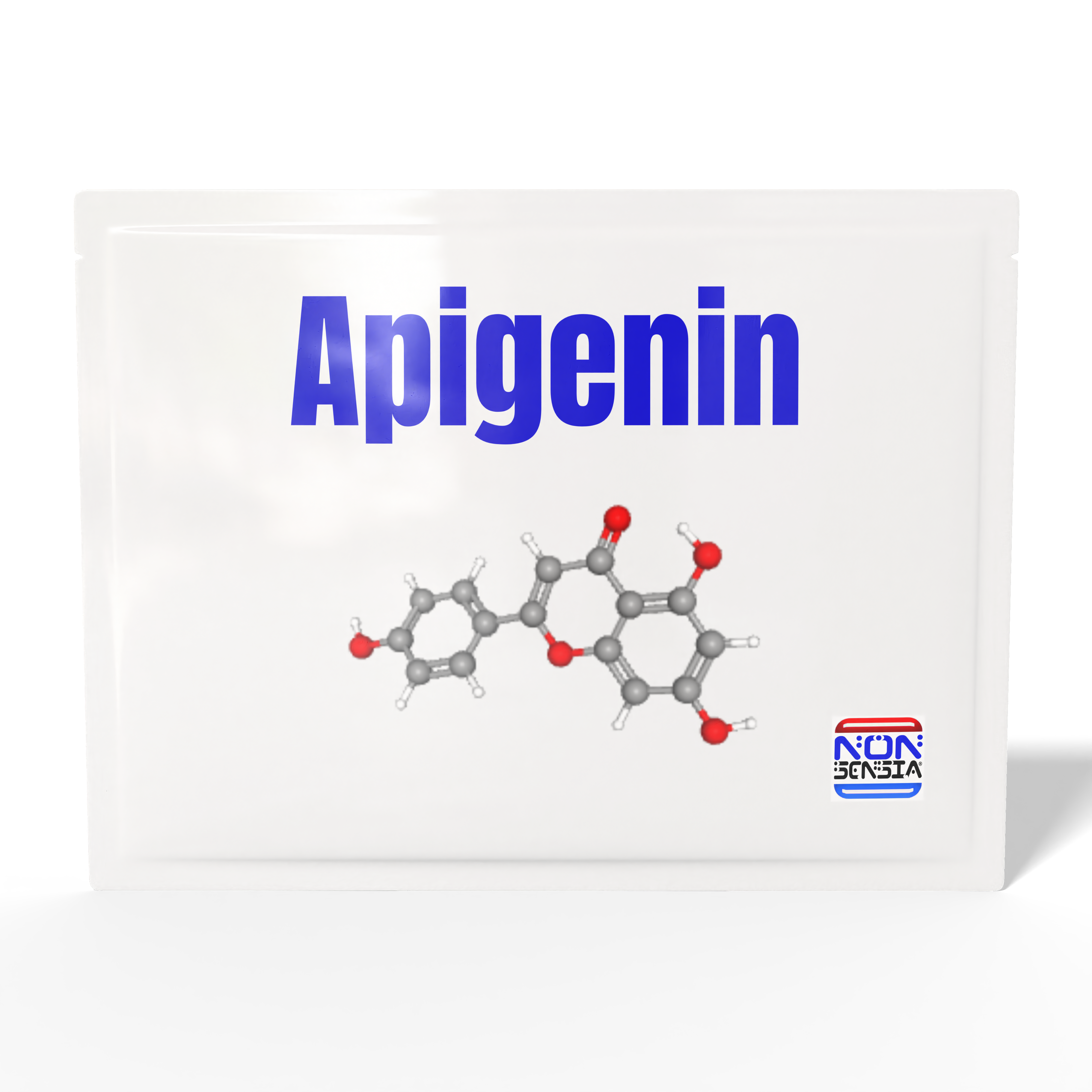
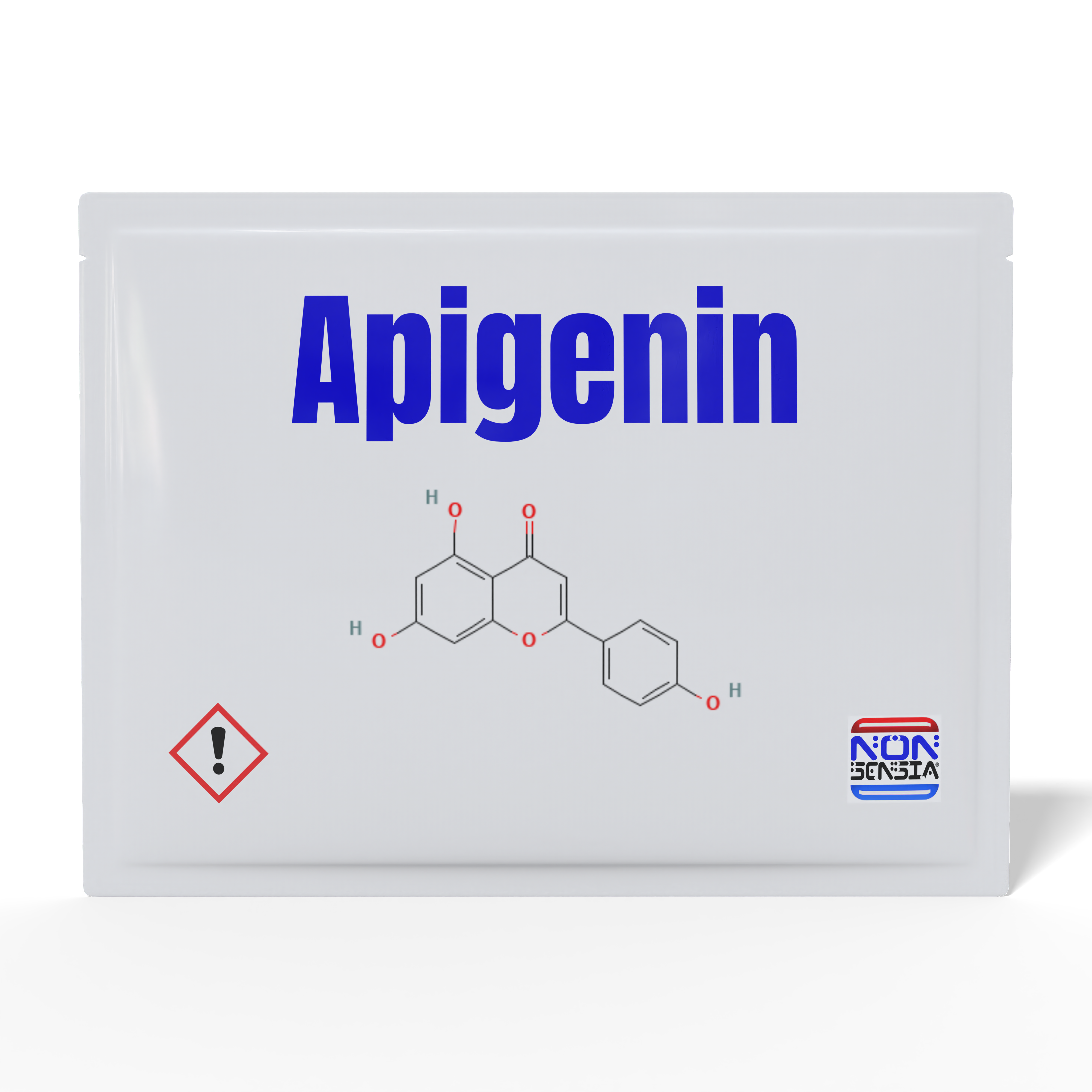
Apigenin ≥99% – Analytical Reference Standard, 1000 mg | CAS 520-36-5
26,99 zł
Apigenin Reference Standard — CAS 520-36-5, 4′,5,7-Trihydroxyflavone, C15H10O5
Flavone aglycone isolate supplied for identity confirmation, retention-time assignment and method development in food, herbal and phytochemical analysis. Laboratory reagent and analytical reference material only — not for human or animal consumption, and not a medicinal product, a dietary supplement, a food ingredient or a colouring.
- Read this first: no mass measurement identifies this compound. Genistein, baicalein, galangin, norwogonin, emodin, aloe-emodin and several trihydroxyflavone isomers all have formula C15H10O5, average mass 270.24 and monoisotopic mass 270.05282342 Da — identical to the last digit. Higher resolving power changes nothing, because there is no mass difference to resolve
- CAS / CID / EC / UNII: 520-36-5 · PubChem 5280443 · EC 208-292-3 only · 7V515PI7F6
- Identity trap in the record: a second EC number (628-919-8) and a second live CAS number (8002-66-2) belong to Chamomile oil, German — a UVCB mixture, not this compound. Neither may travel onto documentation for this substance
- Formula / mass: C15H10O5 · 270.24 g·mol−1 · InChIKey
KZNIFHPLKGYRTM-UHFFFAOYSA-N— the only identifier here not shared with an isobar - Aglycone, not glycoside: apigenin 7-O-glucoside, vitexin and isovitexin are all C21H20O10 at 432.4 and mutually isobaric; apiin is 564.5. Acid and enzymatic hydrolysis free the aglycone from O-glycosides and never from the C-glycosides vitexin and isovitexin — a total-apigenin assay loses that pool with nothing wrong in the chromatogram
- The decisive tests: retention against an authentic standard, and the two-band flavone ultraviolet profile — 269 and 340 nm in ethanol, ε 18 800 and 20 900. The long-wavelength band is what an isoflavone lacks
- Stereochemistry: 0 defined and 0 undefined stereocentres of either kind — achiral. A chiral column has nothing to separate here
- Data as recorded: melting point 345–350 °C and 347.5 °C (two entries); measured log Kow 3.02 against computed XLogP3 1.7, a twenty-fold disagreement; solubility qualitative only, with no numerical water solubility, no density, no pKa, no boiling point on record
- Spectra: 1 598 LC-MS and 63 MS/MS deposits, but zero two-dimensional NMR, zero powder diffraction and zero thermal analysis — the record is richest in the technique that cannot answer the identity question
- Hazards: Warning, from self-notification in two blocks that disagree — H315 + H412 from four notifications, H315 + H319 + H335 from twelve, with about a quarter of the second block reporting no GHS criteria met. Not harmonised, not legally binding
- Status: not on the WADA 2026 list by name; not in the Polish controlled-substance schedules; no Polish medicinal-product record; no INN and no ATC code. Each negative measured with a positive control that fired
Solid form is the open question and the reason to characterise the lot in hand: seven independent lines of published work — solid dispersions, cocrystals, co-amorphous systems, nanocrystals and supercritical processing — all address how this compound goes into solution, and nothing describing its solid state has been deposited publicly. Full registry data, the isobar analysis, the aglycone-versus-glycoside problem, method starting points and 41 cited sources are set out below.
Quick Payment
100% New
Fast Delivery
- Additional Information
Product classification — read before ordering. This item is a chemical reagent and analytical reference material. It is not a medicinal product, dietary supplement, food, feed, novel food or cosmetic, and it is not intended for human or animal consumption or for any in-vivo administration whatsoever. It is supplied exclusively to laboratories, research institutions and professional users for in-vitro analytical, chromatographic and method-development work. Scientific findings summarised on this page describe substances investigated in published laboratory and clinical research; they are reported here as bibliographic facts about that literature and are not product claims, dosage guidance, or a recommendation of any use of this reagent.
Nothing that weighs this molecule can identify it. Read sections 4 and 5 before ordering. Apigenin has the formula C15H10O5, an average mass of 270.24 and a monoisotopic mass of 270.05282342 Da [1]. So does genistein [2]. So do baicalein, galangin, norwogonin, emodin, aloe-emodin and at least three further trihydroxyflavones, every one of them sold somewhere as a reference material, every one of them agreeing with apigenin to the last significant figure of the exact mass. A formula search of the registry returns the maximum number of records requested — four hundred — so the true size of that isobaric class is larger still. High-resolution mass spectrometry does not help, because there is no mass difference to resolve: the elemental composition is identical, so the mass defect is identical too. What separates these compounds is retention against a standard, the shape of the ultraviolet spectrum, tandem-mass fragmentation, and the InChIKey written on a certificate. All four of those routes require a material of confirmed identity to compare against, and that is what this page is about.
Key facts
- Substance
- Apigenin; 4′,5,7-trihydroxyflavone; 5,7-dihydroxy-2-(4-hydroxyphenyl)chromen-4-one
- CAS
- 520-36-5 — see section 3 for two further CAS numbers that travel with this record and belong elsewhere
- PubChem CID
- 5280443 [1]
- EC number
- 208-292-3 only. The record also carries 628-919-8, which is Chamomile oil, German — a UVCB mixture, not this compound (section 3) [1][7]
- UNII
- 7V515PI7F6 [11]
- Other registry codes
- CHEBI:18388 · CHEMBL28 · DrugBank DB07352 · KEGG C01477 · DSSTox DTXSID6022391 · NCIt C68466 · HMDB0002124 · LIPID MAPS LMPK12110005 · Nikkaji J6.601J · MDL MFCD00006831 · Wikidata Q424567
- INN / ATC
- Neither exists. Apigenin is not an international nonproprietary name and carries no anatomical-therapeutic-chemical code
- Formula
- C15H10O5
- Molecular mass
- 270.24 g·mol−1
- Monoisotopic mass
- 270.05282342 Da — identical to the exact mass, and identical to that of every compound in section 4
- InChIKey
KZNIFHPLKGYRTM-UHFFFAOYSA-N— the only identifier in this box that is not shared with an isobar- Stereocentres
- 0 defined and 0 undefined atom stereocentres; 0 defined and 0 undefined bond stereocentres. Achiral (section 6)
- Form
- Solid; yellow needles from aqueous pyridine [1]
- Melting point
- 345–350 °C and 347.5 °C — two independent registry entries [1]
- Partition coefficient
- log Kow 3.02 (measured) against XLogP3 1.7 (computed) — a gap of 1.3 log units, discussed in section 8 [1]
- Ultraviolet
- λmax 269 and 340 nm in ethanol, ε 18 800 and 20 900 [1]
- Deposited spectra
- 1 598 LC-MS, 98 GC-MS, 75 other MS, 63 MS/MS, 8 ATR-IR, 7 Raman, 3 13C NMR, 2 1H NMR, 2 UV. Zero two-dimensional NMR, zero powder diffraction, zero thermal analysis (section 9)
- GHS
- Warning. Two separate aggregation blocks: H315 + H412, and H315 + H319 + H335. A quarter of one block's reporters state that the substance does not meet GHS criteria at all (section 11)
- Regulatory
- Not on the WADA 2026 list [8]; not in the Polish schedules of controlled substances [10]; no Polish medicinal-product authorisation [9]; no harmonised CLP classification found (section 12)
On this page
- What this material is
- Identity and registry codes
- Two EC numbers, and other bookkeeping that reaches documents
- The isobaric class at 270.0528
- Aglycone or glycoside, and the hydrolysis that loses a pool in silence
- Structure and stereochemistry
- What actually separates apigenin from its isobars
- Physicochemical data, with attribution per value
- Spectra: 1 598 mass spectra and no HMBC
- Solid form: the gap the public record leaves open
- Hazard classification, and how it is assembled
- Regulatory status
- What the literature says, and the part of it that has been withdrawn
- Handling and storage
- What we certify and what we do not
- Terms of supply
- Questions and answers
1. What this material is
This page describes apigenin supplied as an analytical reference material: a weighed quantity of a single identified substance, intended as the point of comparison against which another sample is measured. It is an isolate, not an extract. The distinction is not pedantry. An extract is by definition a mixture drawn from a plant matrix and characterised by what it contains in aggregate, while a reference material is characterised by a single identity and by everything it does not contain. A figure such as 99 per cent describes an isolate; it cannot describe an extract, and a listing that uses both words at once is describing two different articles.
Apigenin is the aglycone of a large family of plant glycosides and one of the most frequently measured flavones in food and herbal analysis. It is the compound behind the chemometric quality assessment of chamomile tea [27], the analyte in an immunoassay developed for celery in 2025 [26], one of the five flavonoids quantified in the classic survey of edible tropical plants [18], and a routine target in herbal work such as the flavonoid assay of Viola tricolor [22]. In every one of those applications the compound does the same job: it is a marker whose measured amount says something about the identity or the quality of a raw material. That job requires a calibrant, and the calibrant has to be the right molecule.
Being the right molecule is where this compound becomes difficult, and it is difficult in two independent ways that a single measurement will not settle.
The first is isobarism. Apigenin shares its formula and its exact mass with a class of compounds that includes genistein, baicalein, galangin, emodin and several further trihydroxyflavones (section 4). No mass measurement, at any resolution, separates them. The second is the aglycone-versus-glycoside question (section 5). In plants apigenin occurs mostly bound to sugars, and the standard laboratory manoeuvre for converting the bound forms back into the aglycone works on one class of glycosidic bond and fails silently on another. A laboratory reporting total apigenin after hydrolysis can therefore lose an entire pool of the analyte with nothing in the chromatogram indicating that a loss occurred.
Both problems are addressed the same way: by holding material of confirmed identity, running it under the same conditions as the sample, and comparing retention, ultraviolet band shape and fragmentation rather than mass alone. Compare the shape of the problem elsewhere in this catalogue. On tadalafil the ambiguity is stereochemical, and four stereoisomers share one exact mass; on alpha-GPC it is positional, and phosphorus NMR resolves it; on mebicar the compound has no chromophore at all and the ultraviolet detector is useless. Apigenin is the opposite case on that last point — its molar absorptivity is of the order of 2 × 10⁴, which is why a great deal of routine work on it is done by liquid chromatography with ultraviolet detection and never reaches a mass spectrometer. The problem here is not seeing the peak. The problem is knowing which of several identical-mass compounds the peak belongs to.
The terms on which this and every other reference material here is supplied are collected in the reference standards category.
2. Identity and registry codes
| Preferred name | Apigenin |
|---|---|
| Common synonyms | 4′,5,7-Trihydroxyflavone; 5,7-dihydroxy-2-(4-hydroxyphenyl)-4H-chromen-4-one |
| CAS Registry Number | 520-36-5 — present in twelve independent entries of the record's identifier section |
| Deprecated CAS | 461015-54-3 |
| EC number | 208-292-3 (EINECS). This one and no other — section 3 |
| PubChem CID | 5280443 [1] |
| UNII (FDA) | 7V515PI7F6 [11] |
| ChEBI | CHEBI:18388 |
| ChEMBL | CHEMBL28 |
| DrugBank | DB07352 |
| KEGG | C01477 |
| DSSTox | DTXSID6022391 (DTXCID902391) |
| NCI Thesaurus | C68466 |
| HMDB | HMDB0002124 |
| LIPID MAPS | LMPK12110005 |
| Nikkaji | J6.601J |
| MDL number | MFCD00006831 |
| Wikidata | Q424567 |
| ATC / INN | Neither exists. No anatomical-therapeutic-chemical code, no international nonproprietary name |
| IUPAC (computed) | 5,7-dihydroxy-2-(4-hydroxyphenyl)chromen-4-one |
|---|---|
| SMILES | C1=CC(=CC=C1C2=CC(=O)C3=C(C=C(C=C3O2)O)O)O |
| Connectivity SMILES | Identical to the above. The registry no longer publishes separate canonical and isomeric SMILES fields for this record, and with no stereocentres there is no isomeric layer to carry |
| InChI | InChI=1S/C15H10O5/c16-9-3-1-8(2-4-9)13-7-12(19)15-11(18)5-10(17)6-14(15)20-13/h1-7,16-18H |
| InChIKey | KZNIFHPLKGYRTM-UHFFFAOYSA-N |
| Computed descriptors | XLogP3 1.7 · TPSA 87 Å2 · hydrogen-bond donors 3 · acceptors 5 · rotatable bonds 1 · heavy atoms 20 · complexity 410 · formal charge 0 · covalently bonded units 1 · isotope atoms 0 |
Three rows in that second table carry more weight than their position suggests. One rotatable bond is the single bond joining the two ring systems, and it is the only conformational freedom the molecule has; everything else is a fused, planar, conjugated frame. Three hydrogen-bond donors are the three phenolic hydroxyl groups, and one of them — the 5-OH — is engaged in an internal hydrogen bond to the 4-carbonyl that never leaves the molecule, and that turns up again in section 8 as the most likely reason the computed and the measured partition coefficients disagree. One covalently bonded unit settles a question that matters commercially: this material is a free phenol, not a salt and not a hydrate, so 270.24 is the mass of the substance supplied. Searches for a sodium salt, a potassium salt, a hydrochloride, a monohydrate and a dihydrate each return nothing, and the familiar trap of quoting the mass of a free base against the mass of a salt does not arise here.
3. Two EC numbers, and other bookkeeping that reaches documents
Before the chemistry, the paperwork — because this record aggregates identifiers belonging to a botanical mixture alongside identifiers belonging to the pure compound, and the two are easy to copy across.
The second EC number belongs to an essential oil
The record's European Community number section holds two entries. One is 208-292-3, the EINECS number for apigenin. The other is 628-919-8, which belongs to Chamomile oil, German — a UVCB substance, that is, a material of unknown or variable composition defined by its source and its process rather than by a molecular structure. An essential oil and a crystalline flavone are not the same regulatory object, and only the first of those two numbers may be written against this substance on a document, in structured data, or in the header of a safety data sheet.
| Identifier | What it actually denotes | Where it appears |
|---|---|---|
| EC 628-919-8 | Chamomile oil, German — UVCB mixture | Live EC-number section, beside the correct number |
| CAS 8002-66-2 | Chamomile oil, German — the same mixture | Live CAS section, not merely a withdrawn synonym |
| CAS 461015-54-3 | Deprecated number for this substance | Listed as deprecated; may legitimately appear on older paperwork |
| CAS 105-46-4, 100367-40-6, 263711-74-6, 36052-37-6 | Numbers withdrawn from this record | Removed-synonyms list — not to be used |
The chamomile pair is the one to watch, because it is not confined to a list of discarded names: CAS 8002-66-2 sits in the live identifier section of the record. Anyone copying a CAS number out of an aggregated page therefore has two live numbers in front of them, one of which describes a steam-distilled oil. The consequence is not academic. A safety data sheet headed with the oil's number describes a different material, with a different composition, a different classification and a different regulatory history, while the label on the bottle says apigenin.
Why the record is assembled this way
None of this is a defect in the registry. Apigenin is a constituent of German chamomile, so the two entities are genuinely related and an aggregating database will link them. What the aggregation cannot do is mark which identifier belongs to which entity in a way that survives being copied into a spreadsheet. The rule for anyone preparing documentation is short enough to write on the bench: for this substance exactly one EC number and exactly one CAS number are correct — 208-292-3 and 520-36-5 — and both chamomile-oil numbers are correct for something else.
Names that resolve to nothing
A related nuisance affects fragments of the systematic name. The full locant string is 4′,5,7-trihydroxyflavone, and it contains commas. Split on those commas by an import routine, it yields fragments such as 7-trihydroxyflavone, which is not a chemical name at all: trihydroxy requires three locants and one locant is not three. Fragments of that kind resolve to no compound in any registry, and where they survive in catalogue navigation or in a specification field they are dead ends that look like chemistry. When a name is used as a search key, the whole locant string travels together or the name is not used at all.
4. The isobaric class at 270.0528
This is the section that decides whether an apigenin result means anything.
Genistein weighs exactly what apigenin weighs. Apigenin: C15H10O5, average mass 270.24, monoisotopic mass 270.05282342 Da [1]. Genistein: C15H10O5, average mass 270.24, monoisotopic mass 270.05282342 Da [2]. Identical to the last significant figure, because they are constitutional isomers built from the same atoms — a flavone with the B-ring at C-2 and an isoflavone with the B-ring at C-3. A mass spectrometer of any resolution returns the same number for both. There is no mass defect to exploit, because the elemental composition is the same; there is no nominal-mass difference; there is no isotope-pattern difference. Increasing resolving power from 30 000 to 100 000 changes nothing at all, because the quantity being resolved does not differ.
Genistein is not a curiosity. It is a commercially available reference material, it occurs in plant-derived products, and it is discussed jointly with apigenin in the review literature precisely because the pair travels together [17]. Confusing the two is a realistic laboratory outcome rather than a thought experiment.
And the pair is not a pair. A formula search of the registry for C15H10O5 returns the maximum number of records requested — four hundred — so the class is at least that large. Reading the first sixty of those records and pulling the title, the molecular weight, the monoisotopic mass and the InChIKey for each one produces the following list of substances that are themselves sold as analytical standards.
| Compound | Class | CID | InChIKey, first block |
|---|---|---|---|
| Apigenin | Flavone, 4′,5,7-OH | 5280443 | KZNIFHPLKGYRTM |
| Genistein | Isoflavone | 5280961 | TZBJGXHYKVUXJN |
| Baicalein | Flavone, 5,6,7-OH | 5281605 | FXNFHKRTJBSTCS |
| Galangin | Flavonol | 5281616 | VCCRNZQBSJXYJD |
| Norwogonin | Flavone, 5,7,8-OH | 5281674 | ZFKKRRMUPBBYRS |
| Emodin | Anthraquinone | 3220 | RHMXXJGYXNZAPX |
| Aloe-emodin | Anthraquinone | 10207 | YDQWDHRMZQUTBA |
| 3′,4′,7-Trihydroxyflavone | Flavone, positional isomer | 5322065 | PVFGJHYLIHMCQD |
| 5,7,2′-Trihydroxyflavone | Flavone, positional isomer | 5322064 | OFYPDAKTVZXXPC |
| 3,4′,7-Trihydroxyflavone | Flavonol, positional isomer | 5281611 | OBWHQJYOOCRPST |
| Every row: molecular weight 270.24, monoisotopic mass 270.05282342 Da | |||
Read the second column. This is not a family of near-neighbours differing in one hydroxyl position, although three of them are exactly that. It also contains an isoflavone, in which the entire B-ring has migrated from C-2 to C-3; a flavonol, which carries its extra oxygen at C-3 of the pyranone ring; and two anthraquinones, which are not flavonoids at all and which arrive at the same formula from a completely different biosynthetic direction. The compounds have different chromophores, different polarities, different chromatographic behaviour and different chemistry. What they do not have is a different mass.
What this does to a protonated-molecule workflow
A targeted method built on the protonated molecule sees a precursor at m/z 271.0601 — the value carried in the record's own mass-spectrometric fields [1]. That precursor is common to every compound in the table above. A single-quadrupole method monitoring 271, or a high-resolution method extracting 271.0601 with a narrow window, will integrate a peak for any of them that happens to elute in the retention window, and will report it as apigenin because that is the name the method assigned to the transition.
Ion mobility does not close the gap either, although it narrows it. The record carries collision cross-sections of 154.59 and 154.86 Å2 for the protonated molecule, 150.54 Å2 for the water-loss ion and 171.75 Å2 for the sodium adduct, all travelling-wave values calibrated against polyalanine and drug standards [1]. Those are useful numbers, but the spread between two determinations of the same ion — 154.59 against 154.86 — is itself a fifth of a per cent, and the isobars in the table are structurally close enough that no published cross-section separates them reliably. A cross-section is corroboration; it is not an identification.
The practical statement. An apigenin result is only as good as the retention time it was assigned against, and a retention time is only as good as the standard it was measured from. This is the concrete, unglamorous reason to hold a reference material for this compound rather than to rely on an accurate-mass library match: the mass is shared, the retention time is not, and the retention time only exists if someone measured it on authentic material under the same conditions. Everything in sections 7 and 9 follows from that sentence.
5. Aglycone or glycoside, and the hydrolysis that loses a pool in silence
The second identity question is different in kind. Here the masses do differ, and differ enormously — which is precisely why the trap is procedural rather than spectrometric, and why it survives in laboratories that have their mass spectrometry entirely under control.
In plants, apigenin occurs mostly bound to sugars. The glycosides are separate compounds with separate registry records and separate masses.
| Compound | Linkage | Formula | Average mass | Monoisotopic mass | CID |
|---|---|---|---|---|---|
| Apigenin (aglycone) | — | C15H10O5 | 270.24 | 270.05282342 | 5280443 |
| Apigenin 7-O-glucoside | O-glycoside | C21H20O10 | 432.4 | 432.10564683 | 5280704 |
| Vitexin | C-glycoside, C-8 | C21H20O10 | 432.4 | 432.10564683 | 5280441 |
| Isovitexin | C-glycoside, C-6 | C21H20O10 | 432.4 | 432.10564683 | 162350 |
| Apiin | O-diglycoside | C26H28O14 | 564.5 | 564.14790556 | 5280746 |
The aglycone-to-monoglycoside step adds 162.05 Da, the residue of an anhydroglucose unit; apiin, which carries a glucose and an apiose, sits 294.10 Da above the aglycone and weighs more than twice as much [15]. Those differences are enormous by mass-spectrometric standards. Nobody mistakes 270 for 564.
The three that weigh the same as each other
Look again at rows two, three and four. Apigenin 7-O-glucoside, vitexin and isovitexin are mutually isobaric: the same formula, the same average mass of 432.4, the same monoisotopic mass of 432.10564683 Da. They are separated by the InChIKey and by nothing that a balance or a mass analyser can do — KMOUJOKENFFTPU, SGEWCQFRYRRZDC and MYXNWGACZJSMBT respectively [3][4][5]. The isobaric structure of section 4 repeats one tier up, on the glycoside layer, for the same reason: these are isomers, not homologues.
The hydrolysis that only works on half the problem
The registry's own manufacturing note states the classical route in one sentence: apigenin is “the aglucon of apiin and of apigenin-7-glucoside. From apiin by boiling with acids, from apigenin-7-glucoside by enzymatic hydrolysis with emulsion or by boiling with 15% H2SO4” [1]. Every route named there acts on an O-glycosidic bond — a carbon–oxygen–carbon linkage that acid or a glycosidase will cleave. Vitexin and isovitexin are C-glycosides. Their sugar is attached through a direct carbon–carbon bond to the flavone A-ring, at C-8 and C-6 respectively. A carbon–carbon bond is not hydrolysed by boiling acid and is not touched by a glycosidase. It survives the procedure intact.
The consequence is the quietest failure mode on this page. A laboratory determining total apigenin in a plant material by hydrolysing the extract and quantifying the liberated aglycone against a standard will recover the aglycone that was already free, plus everything that was bound through oxygen — and none of what was bound through carbon. The C-glycoside pool passes through the procedure as vitexin and isovitexin, elutes at its own retention times, and is never counted. The reported figure is low by whatever fraction of the flavone content the matrix happened to store as C-glycosides, which varies by species, by tissue and by season.
Nothing in the chromatogram indicates that this has happened. The aglycone peak is present, symmetrical and on retention; the calibration is linear; the recovery of a spiked aglycone standard is excellent, because a spiked aglycone is not a C-glycoside and has nothing to survive. Every quality-control indicator the method looks at reports success. The published work on the hydrolysis behaviour of apigenin 7-O-glucoside is worth reading precisely because it treats the hydrolysis step as an object of study rather than as a given [14], and the broader flavone literature separates the aglycone pool from the glycoside pool explicitly for the same reason [16].
What this means for the standard you buy. The material on this page is the aglycone — C15H10O5, 270.24, CAS 520-36-5. It calibrates the aglycone peak. It does not calibrate vitexin, isovitexin or apiin, and it cannot tell you how much of your matrix was stored in those forms. If the question you are asking is how much apigenin-derived flavone is in this material, the aglycone standard is one of at least three standards the method needs, and the hydrolysis step is a source of systematic loss that has to be quantified rather than assumed. If the question is is this peak apigenin, the aglycone standard is exactly the right and sufficient tool.
6. Structure and stereochemistry
Apigenin is a flavone: a benzopyran-4-one core, the A-ring carrying hydroxyls at C-5 and C-7, and a para-hydroxyphenyl B-ring attached at C-2. The whole assembly is planar and conjugated, and the 5-hydroxyl sits in a six-membered internal hydrogen bond with the 4-carbonyl. That internal bond is the structural detail with the most consequences on this page: it accounts for the intense long-wavelength absorption, for the yellow colour, for the reduced availability of one of the three hydroxyls as a donor, and — in all probability — for the partition-coefficient disagreement in section 8.
The stereochemistry is stated by the record without ambiguity, and the four counters are quoted here verbatim [1]:
| Defined atom stereocentre count | 0 |
|---|---|
| Undefined atom stereocentre count | 0 |
| Defined bond stereocentre count | 0 |
| Undefined bond stereocentre count | 0 |
| Covalently bonded units | 1 |
| Isotope atom count | 0 |
Apigenin is achiral. There are no enantiomers, no diastereomers, no optical rotation to specify and nothing for a chiral column to separate. The InChIKey ends in UHFFFAOYSA, the block that encodes the absence of a stereochemical layer, which is an independent confirmation of the same fact from a different part of the identifier. Every carbon in the molecule is either aromatic, olefinic, carbonyl or ring-fusion; none carries four different substituents.
Three practical consequences follow, and it is worth being explicit about them because the opposite claims are cheap to make and impossible to support.
- Any statement about a dextrorotatory or laevorotatory form, an L- or D-form, an enantiomeric excess or an enantiomeric purity of apigenin is fabricated by construction. There is no such quantity to measure. A specific rotation reported for this compound would have to be zero within measurement error, and a non-zero value would indicate a chiral impurity rather than a property of apigenin.
- A chiral column is wasted here. The entire burden of specificity falls on reversed-phase separation, on ultraviolet band shape and on fragmentation — the three routes discussed in section 7. This is the reverse of the situation on tadalafil, where two defined stereocentres make chiral separation the whole question and mass spectrometry the useless technique.
- The isomerism that does exist here is constitutional, not configurational. Every compound in the table in section 4 is a constitutional isomer: the atoms are connected differently, not arranged differently in space. Constitutional isomers are separated by chromatography and by fragmentation, never by polarimetry.
7. What actually separates apigenin from its isobars
Three routes, in descending order of how routinely they are available.
Ultraviolet band shape, which is free
The record carries two ultraviolet entries, and between them they give the classical two-band flavone picture: λmax 269 and 340 nm in ethanol, with molar absorptivities of 18 800 and 20 900 [1]. In flavonoid convention the shorter-wavelength feature is band II, associated with the benzoyl part of the chromophore — the A-ring and the carbonyl — and the longer-wavelength feature is band I, associated with the cinnamoyl part, the B-ring conjugated through C-2 and C-3 to the carbonyl.
That second band is the diagnostic one. It exists because the B-ring of a flavone is attached at C-2 and is therefore in conjugation with the carbonyl through the C-2/C-3 double bond. In an isoflavone the B-ring is attached at C-3, which breaks that conjugation path; the long-wavelength band collapses to a shoulder and the spectrum becomes essentially single-banded. A diode-array detector records the whole spectrum at every point of the peak at no extra cost, and the presence or absence of a well-formed band I near 340 nm therefore discriminates a flavone from an isoflavone on data the instrument has already collected.
The limit of what we will assert here. The two apigenin wavelengths and the two absorptivities above are quoted values from a named record [1]. The behaviour of the isoflavone band I is a well-established spectroscopic generalisation about the class, and we state it as such — we did not measure a genistein spectrum for this page and we do not quote numbers for one. Treat the band-shape test as a strong screening criterion to be confirmed against your own standards, not as a certified specification.
Retention against an authentic standard
Chromatography separates constitutional isomers because their polarities and their hydrogen-bonding patterns differ even when their formulae do not. Apigenin, genistein, baicalein and galangin have their hydroxyls in different places and interact with a C18 surface differently; they elute at different times. The published methods that handle these compounds in real matrices work exactly this way — the flavonoid assay of Viola tricolor [22], the simultaneous determination of seven flavonoids in bamboo-leaf extract [24], the joint extraction of apigenin and luteolin from celery seed with a deep eutectic solvent [25], and the data-independent acquisition strategy for comprehensive flavonoid profiling [23] all rest on retention as the primary identity criterion, with mass as corroboration.
The catch is structural and unavoidable: retention is only an identity criterion relative to a standard measured on the same column, in the same mobile phase, on the same day. It is not transferable from a publication. It is not a property of the molecule. It is a property of the molecule and the system, and the only way to obtain it is to inject authentic material.
Tandem mass fragmentation, with a caveat about numbers
Flavones and isoflavones fragment differently. The characteristic pathway for both classes is a retro-Diels–Alder cleavage of the C-ring, which splits the molecule into an A-ring fragment and a B-ring fragment; because the B-ring is attached at a different position in the two classes, the mass distribution between those fragments differs. This is the basis on which tandem mass spectrometry distinguishes them, and it is why the tandem literature on flavonoids is as large as it is. The record's own LC-MS data is anchored to a study of the phenolic composition of cocoa by liquid chromatography with electrospray tandem mass spectrometry [20], and validated quantitative methods for apigenin in biological matrices exist and are published [21].
We do not print diagnostic fragment masses on this page. The mechanism above is settled; the specific m/z values for apigenin and for each of its isobars were not measured for this page, and quoting fragment ions from memory is how wrong numbers enter circulation. The record contains 63 deposited tandem spectra and 1 598 liquid-chromatography mass spectra, several of them carrying SPLASH identifiers such as splash10-00di-0290000000-4fda4ee5563c8979c8e4 [1]; that is where the fragment masses should be read from, by whoever needs them, against their own instrument.
The method that would settle it, and that does not exist publicly
For positional questions — is the hydroxyl at C-6 or C-8, is the B-ring at C-2 or C-3 — the decisive experiment is heteronuclear multiple-bond correlation NMR, which shows which protons couple to which carbons two and three bonds away and therefore maps substitution directly. Section 9 records what the public spectral holdings contain. There is no HMBC spectrum for apigenin in them. There is no COSY, no HSQC and no NOESY either. The technique that answers the question this compound actually poses is the one technique nobody has deposited.
8. Physicochemical data, with attribution per value
What follows is what the record holds, with attribution, followed by an explicit list of what it does not hold. The absences are given as findings rather than omissions: each was checked by enumerating the record's property sections programmatically, not by failing to find something.
| Property | Value | Character of the value |
|---|---|---|
| Physical description | Solid | Qualitative |
| Colour and form | Yellow needles from aqueous pyridine | Qualitative, with the crystallisation solvent named |
| Melting point | 345–350 °C | Range, one entry |
| Melting point | 347.5 °C | Point value, a second and independent entry |
| Partition coefficient | log Kow 3.02 | Measured |
| Partition coefficient | XLogP3 1.7 | Computed |
| Solubility | Soluble in ethanol, pyridine and concentrated sulfuric acid; very soluble in dilute alkali with an intense yellow colour; moderately soluble in hot alcohol | Qualitative only — no number anywhere |
| Ultraviolet maxima | 269 and 340 nm in ethanol; ε 18 800 and 20 900 | Measured, solvent stated |
| Behaviour on heating | “When heated to decomposition it emits acrid smoke and irritating fumes” | Qualitative. No temperature is given |
| Collision cross-section | 154.59 and 154.86 Å2 [M+H]+; 150.54 Å2 [M+H−H2O]+; 171.75 Å2 [M+Na]+; 156 Å2 [M+H]+ | Travelling-wave, calibrated with polyalanine and drug standards |
| Property | Status |
|---|---|
| Numerical water solubility | None. Only the qualitative statement above |
| Density | None. The section does not exist for this record |
| pKa / dissociation constants | None — and see the note below on why this one is hard to source elsewhere |
| Boiling point | None |
| Vapour pressure | None |
| Flash point | None |
| Refractive index | None |
| Numerical decomposition temperature | None. Only the qualitative sentence about acrid smoke |
| Odour, taste | None. The record carries no organoleptic annotation of any kind |
The partition coefficients disagree by 1.3 log units
The record holds both a measured and a computed lipophilicity, side by side and independently: log Kow 3.02, measured, against XLogP3 1.7, computed [1]. The gap is 1.3 log units, which is a factor of roughly twenty in the partition ratio. That is not a rounding difference and it should not be averaged away. The likely mechanism is the internal hydrogen bond described in section 6: additive fragment algorithms count three phenolic hydroxyls as three polar contributions, whereas in the real molecule the 5-hydroxyl is locked against the 4-carbonyl and is substantially withdrawn from interaction with the solvent. The molecule behaves as though it had fewer exposed donors than it formally possesses, and it is correspondingly more lipophilic than the arithmetic predicts. For method development, use the measured value. For any document that quotes a lipophilicity, quote which of the two it is; the two numbers describe the same molecule and disagree by twenty-fold, so a value without a label is not usable.
Figures that circulate without a registry behind them
Three kinds of number are worth naming here because they appear in commercial listings for this substance and are not registry values.
A pH figure, typically quoted as a narrow range near 3. The record holds no pH and no dissociation constant. Beyond the absence, the quantity is the wrong kind of quantity: pH is a property of an aqueous solution, and this compound has no numerical water solubility on record and is described as soluble in ethanol, pyridine, concentrated acid and dilute alkali — not in water. A pH quoted for a crystalline solid of this description is not a measurement that could have been made in the form it is presented.
A density, typically around 1.4 g·mL−1 at 20 °C. The record holds no density at all. The unit convention is also revealing: grams per millilitre qualified by a temperature is how liquids are reported, whereas a solid melting near 347 °C is reported as a true or a bulk density, and the two are different quantities measured by different methods.
A decomposition maximum near 275 °C, sometimes with a Fahrenheit conversion attached. This one can be dismissed without consulting any external source, twice over. First, the compound has two independent melting-point entries at 345–350 °C and 347.5 °C [1]; a substance that decomposed at 275 °C could not have a melting point recorded seventy degrees higher, because there would be nothing left to melt. Second, the conversion arithmetic tends not to close: 275 °C is 527.0 °F exactly, and a Fahrenheit figure of 529 corresponds to 276.1 °C, so the pair is internally inconsistent by two degrees Fahrenheit and neither number is the conversion of the other. A pair of numbers that fails its own unit conversion was not measured; it was assembled.
The registry position on thermal behaviour is a single qualitative sentence — acrid smoke and irritating fumes on heating to decomposition — and no temperature. That is the whole of it, and stating that plainly is more useful than any of the three figures above.
A note on searching for the missing pKa
The dissociation constants of the three phenolic hydroxyls would be genuinely useful, because they determine how retention responds to mobile-phase pH and how the compound behaves in the dilute alkali in which it is described as very soluble. They are not in the record. They are also unusually awkward to find by literature search, for a reason that has nothing to do with chemistry: bibliographic search engines are not case-sensitive, so a query for pKa also returns the very large literature on protein kinase A. A hit count from such a query is not a measure of the physicochemical literature and should not be quoted as one. We record the pKa as not established rather than reporting a number we cannot attribute.
9. Spectra: 1 598 mass spectra and no HMBC
Apigenin is one of the better-served compounds in the public spectral record. That makes the shape of what is missing unusually informative, because it cannot be explained by neglect.
| Technique | Entries | Provenance and limitation |
|---|---|---|
| LC-MS | 1 598 | Mass-spectral repositories; SPLASH-identified. The record's cited anchor is a study of cocoa phenolics by liquid chromatography with electrospray tandem mass spectrometry [20] |
| GC-MS | 98 | Repository deposits, including a derivatised metabolomics entry |
| Other mass spectrometry | 75 | — |
| MS/MS | 63 | Tandem spectra; the source from which fragment masses should be read |
| ATR-IR | 8 | Bio-Rad instrument, attenuated-total-reflectance neat technique; sample supplied by a named commercial house, Indofine Chemical Company |
| Raman | 7 | Fourier-transform Raman; same commercial sample, catalogue entry A-002 |
| 13C NMR | 3 | Sample traceable to Wagner, Chari and Sonnenbichler, Tetrahedron Letters 1976, 1799 — a pre-digital citation with no DOI |
| 1H NMR | 2 | Two deposits; frequency and solvent are not stated in the record |
| UV-visible | 2 | The 269 / 340 nm pair with absorptivities, in ethanol |
| COSY, HSQC, HMBC, NOESY | 0 | No two-dimensional NMR of any kind |
| Solid-state NMR (CP-MAS) | 0 | — |
| Powder X-ray diffraction | 0 | — |
| DSC / TGA | 0 | Despite two numerical melting points on the same record |
| Single-crystal structure in the spectral holdings | 0 | — |
Two features of that table deserve to be read together rather than separately.
The instrument that is over-served, and the question it cannot answer
There are 1 598 liquid-chromatography mass spectra and 63 tandem spectra. There is not one two-dimensional NMR experiment. Section 4 established that mass is the one measurement which does not distinguish apigenin from its isobars, and section 7 established that heteronuclear multiple-bond correlation is the experiment that settles substitution position directly. The public record is therefore richest in exactly the technique that cannot answer the identity question, and empty in the technique that can. That is not a criticism of the depositors, who deposited what their instruments produced; it is a description of a gap that a laboratory holding authentic material and a 2D-capable spectrometer could close for itself in an afternoon, and that nobody has closed publicly.
Compare the opposite extreme in this catalogue: chlodantane, for which the deposited-spectra count is zero across every technique, so there is no library match to be had at all. Apigenin has the opposite problem — abundance in one dimension, silence in another — and abundance is easier to mistake for sufficiency.
Provenance is stated for some spectra and not for others
The infrared and Raman entries name the sample supplier and even the supplier's catalogue code, which is unusually good practice and means those spectra can be traced to a physical material. The proton spectra do not state a frequency or a solvent. A proton spectrum without a stated field strength and solvent is usable for pattern recognition and not usable as a quantitative reference: chemical shifts of phenolic protons move with solvent, concentration and temperature, and integration against an internal standard requires knowing the acquisition conditions. When comparing your own spectrum against a deposited one, check which of the two kinds of deposit you are comparing against.
10. Solid form: the gap the public record leaves open
Everything in section 9 that reads 0 concerns the compound as a solid. There is no powder diffractogram, no thermogram, no solid-state NMR and no crystal structure in the spectral holdings. Meanwhile the melting point is recorded twice, numerically, which means somebody ran the thermal measurement and only the endpoint survived into the record.
This matters for apigenin more than it would for most compounds, because the solid-form literature for it is substantial and it is all about the same thing: the material's dissolution behaviour is governed by the state it is in.
| Approach | What was made | Source |
|---|---|---|
| Solid dispersions | Dispersions prepared to raise solubility and dissolution rate | [29] |
| Cocrystals of flavones | Systematic experimental and computational screen across the flavone class | [30] |
| Cocrystal, specific | Apigenin–nicotinamide, characterised in interaction studies | [35] |
| Co-amorphous system | Binary apigenin–oxymatrine mixture | [31] |
| Nanocrystals | Prepared by a supercritical antisolvent process | [32] |
| Self-nanoemulsifying system | Formulated to improve dissolution | [33] |
| Supercritical carbon dioxide processing | A delivery system reported as stable | [34] |
Seven independent lines of work, spanning 2013 to 2025, all attacking the same property. The clear implication is that apigenin exists in more than one solid state and that the state it is in changes how it behaves, in dissolution, in a suspension, and in any procedure where the material has to go into solution before it can be measured.
What we will not claim. A defined, numbered polymorph system for apigenin — form I, form II, form III, with characterised transitions — was not found in this survey. Solid dispersions, co-amorphous systems and cocrystals are not polymorphs; they are multi-component or non-crystalline solids, and calling them polymorphs would be a category error. The honest statement is the weaker one: the solid form of this compound is demonstrably variable and consequential, and the specific enumeration of crystalline forms is not established in the material we surveyed.
Why a purity figure says nothing about this
A purity figure obtained by chromatographic area per cent describes the proportion of the material that is apigenin rather than something else. It says nothing whatever about how the apigenin is packed. Two lots that are indistinguishable at 99 per cent by area can differ in crystallinity, in particle size, in hydration and in dissolution rate, and the difference will show up as irreproducible stock-solution preparation long before it shows up in an assay. This is the strongest argument on this page for characterising the lot in front of you rather than trusting a number on a label: the measurements that would settle solid form are cheap, they are absent from the public record, and nobody else has them either. A diffractogram and a thermogram recorded on your own material are, for this compound, genuinely new data.
11. Hazard classification, and how it is assembled
Apigenin does have a hazard classification. It has, in fact, two, and they do not agree with each other — which is a more useful thing to know than either of them separately.
The classification is aggregated from self-notifications submitted by companies to the European classification and labelling inventory. It is not a harmonised classification: no entry under Annex VI of the CLP Regulation was found for this substance in the material surveyed for this page, and we mark that finding as medium confidence, because absence from an aggregating database is weaker evidence than a direct export from the source registry, which we did not perform [7].
| Basis | 234 reports from companies; 4 notifications to the inventory |
|---|---|
| Signal word | Warning |
| Hazard statements | H315 — causes skin irritation [Skin Irrit. 2], reported by 28.6% H412 — harmful to aquatic life with long lasting effects [Aquatic Chronic 3], reported by 71.4% |
| Precautionary statements | P264, P273, P280, P302+P352, P321, P332+P317, P362+P364, P501 |
| Basis | 110 reports from companies; 12 notifications to the inventory |
|---|---|
| Signal word | Warning |
| Hazard statements | H315 — causes skin irritation [Skin Irrit. 2], 75.5% H319 — causes serious eye irritation [Eye Irrit. 2], 75.5% H335 — may cause respiratory irritation [STOT SE 3], 74.5% |
| Precautionary statements | P261, P264, P264+P265, P271, P280, P302+P352, P304+P340, P305+P351+P338, P319, P321, P332+P317, P337+P317, P362+P364, P403+P233, P405, P501 |
| Dissenting reports | The record states that the substance “does not meet GHS hazard criteria” for 24.5% (27 of 110) of reports |
How to read those two tables
Four points, in order of how much they change the picture.
First, the two blocks classify differently. Block A is dominated by an environmental endpoint, H412; block B is dominated by three local-irritation endpoints and does not mention the environment. The same substance is being described by two populations of notifiers who reached materially different conclusions. Any single line of the form Warning, H315 conceals that split.
Second, the percentages and the notification counts are two different denominators, and neither is large. The percentages are proportions of reports, and the record shows its own arithmetic for block B: 27 of 110 reports state that no GHS criterion is met, which is the 24.5 per cent above, and the hazard statements are carried by 83 of those 110 reports, which is the 75.5 per cent. The notification counts are a different and much smaller tally — twelve distinct notifications behind block B and four behind block A — and one notification may be associated with several companies and therefore with several reports. Block A shows the effect of a small tally most plainly: its two figures, 28.6 and 71.4 per cent, are exactly two sevenths and five sevenths, so the classification there rests on a handful of filings however many reports are aggregated behind them. A percentage looks like a consensus measurement; here it is a proportion of a report pool assembled from a small number of independent opinions, and the two should not be quoted as if they were one number.
Third, roughly a quarter of block B's reporters state that the substance meets no GHS criteria at all. That is not a lower classification; it is a disagreement about whether there is anything to classify. It sits in the record alongside the 75 per cent that report skin, eye and respiratory irritation, and both are self-declared.
Fourth, the association between the blocks and the two EC numbers is an inference, not a recorded fact. The record carries two EC numbers (section 3) and two classification blocks, and it is natural to suppose that one belongs to the pure compound and the other to the chamomile-oil entity. The record does not label them that way. We report the correspondence as a plausible reading and not as a measurement, because it was not measured.
The practical position. Descriptions of this compound as inherently harmless circulate in commercial listings; twelve notifications to the European inventory record skin irritation, serious eye irritation and possible respiratory irritation, and none of the classification is harmonised or legally binding. Neither the reassuring reading nor the alarming one is a measurement. Treat the material as a fine, coloured organic powder of incompletely characterised local irritancy, handle it under section 14, and write into your own risk assessment that the classification derives from self-notification with a documented dissent of about a quarter.
12. Regulatory status
Every negative statement in this section was measured against a named document, and every one of those measurements was paired with a positive control — a substance known to be present in the same document, queried the same way. A search that returns nothing looks identical to a search that never ran, and the control is what tells the two apart.
| Anti-doping, 2026 | Not listed. Zero occurrences of the substance name in the 2026 prohibited list [8]. Controls on the same document: bromantan 2 occurrences, modafinil 4 — both fired |
|---|---|
| Poland — controlled substances | Not scheduled in the Polish schedules of narcotic, psychotropic and new psychoactive substances [10]. Controls: amfetamina 27 occurrences, kokaina 2 — both matched expectation exactly |
| Poland — medicinal product | No record. The national register of medicinal products returns zero results [9]. Control: paracetamol returns 43 records. Method caveat: that register is searched by product trade name, so the correct reading is no medicine is marketed under this name; taken with the absence of an INN and of an ATC code, it is consistent with no medicinal status at all — compare paracetamol, where the same query returns dozens of authorised products |
| European Union — inventory | EC 208-292-3 assigned [7]. Classification is by self-notification only; no harmonised Annex VI entry found (medium confidence, section 11) |
| European Union — food and cosmetics | Not established. Novel-food status and any cosmetic-ingredient listing were not checked for this page. We record that as an open question rather than guessing in either direction |
| United States | UNII 7V515PI7F6 registered in the federal substance registry [11]. The substance is classified among dietary-supplement ingredients and is indexed in the national supplement label database [1][12] — that is a record of appearance on product labels, not a medicinal approval and not a determination of generally-recognised-as-safe status, neither of which was established here |
| United States — controlled substances | Not checked. No controlled-substance annotation appears in the record, but we did not query the federal schedules directly and do not present the silence as a finding |
| New Zealand | Environmental Protection Authority inventory, quoted verbatim: “Does not have an individual approval but may be used under an appropriate group standard” [1] |
One nuance about the anti-doping list, stated because it would otherwise be found and misread. A text search of the 2026 list for the string flavon returns three hits. They do not concern apigenin. All three belong to 7,8-benzoflavone, also called alpha-naphthoflavone, a synthetic compound named in the class covering hormone and metabolic modulators. The flavone skeleton therefore appears on the list exactly once, through one specific synthetic molecule. That is a fact about that molecule, not about this one, and nothing on this page should be read as a statement about the anti-doping status of any substance other than the one named in the table above.
Uses the record ascribes outside research
The record's non-research use annotations are worth quoting because they are frequently displaced by something more fashionable. Apigenin is a dyestuff. The record states that it “has been used to dye chromium mordanted wool yellow” and that “the color is fast to soap”, and it describes the compound as a direct dye with limited application as a component of a chamomile-based hair-colouring extract [1]. That is the historical industrial identity of this molecule: a yellow natural colorant, applied with a mordant, on wool.
The colour is not a decorative fact. It is the same conjugated system that produces the 340 nm band in section 7 and the molar absorptivity around 2 × 10⁴ that makes ultraviolet detection sufficient for routine assay. In this respect apigenin belongs with the other intensely coloured reference materials in the catalogue — methylene blue is the extreme case, where the chromophore is so dominant that it defines both the analytical handle and the historical use. For apigenin, colour, chromophore, dye chemistry and detection limit are four descriptions of one structural fact.
13. What the literature says, and the part of it that has been withdrawn
Two things need saying about the apigenin literature before anything is quoted from it. It is large, and a measurable part of it has been retracted. Both facts change how a reference material for this compound should be documented.
The scale, with comparisons
| Compound | Biomedical index | Cross-publisher index | Role of the comparison |
|---|---|---|---|
| Quercetin | 35 289 | 17 329 | Upper anchor: a saturated flavonoid literature |
| Apigenin | 8 309 | 2 756 | — |
| Genistein | — | 5 058 | The isobar from section 4, itself well studied |
| Luteolin | — | 3 329 | The usual co-eluting neighbour in plant matrices |
| Bromantane | 34 | 2 | Lower anchor: a genuinely little-studied compound |
Apigenin has roughly two hundred and forty times the biomedical literature of bromantane and about a quarter of quercetin's. The practical consequence is simple and it constrains this page: with a literature of this size there is never a reason to cite a weak source. Where something is not established here, it is because the measurement does not exist, not because it was hard to find.
Within that literature the distribution is uneven in a way that matches everything above. Determination in matrices and chromatographic methodology account for several thousand records; glycosides, apiin and vitexin for around two thousand; tandem mass spectrometry and fragmentation for several hundred; solubility and dissolution for over six hundred. The counts that bear directly on the gaps identified in sections 9 and 10 are much smaller: around eighty-five records touching powder diffraction, thermal analysis or crystallinity, about fifty on cocrystals of flavones, and fewer than forty concerning apigenin in the specific sense of a reference standard or a pharmacopoeial article. The solid-state and standards literature is a rounding error against the pharmacology.
Two counts we measured and will not use. A query for pKa returns several hundred records that are substantially about protein kinase A, because bibliographic search is not case-sensitive; a query for synthesis returns several thousand that include biosynthesis and nitric-oxide synthesis. Both counts are contaminated in ways we checked by reading returned titles, and neither is quoted here as a measure of anything. A count used as evidence needs its false-positive rate estimated first, and these two failed that test.
What the literature is about
Analytical chemistry. The foundational entry for a card of this kind is the 1997 study that examined the properties of apigenin alongside its tritiated analogue and developed analytical method around them [19] — the rare paper that treats physicochemical behaviour and measurement as one problem. Modern work runs from validated quantification in biological matrix [21] through profiling strategies using data-independent acquisition [23] to hyphenated high-resolution work on complex herbal preparations [28], with green extraction chemistry supplying the sample-preparation side [25].
Food, herbal and quality-control analysis. This is where a reference standard for apigenin does most of its work: chamomile-tea quality assessed chemometrically [27], an immunoassay for celery [26], seven flavonoids resolved in bamboo-leaf extract [24], the flavonoid content of edible tropical plants [18], and heartsease flavonoids quantified in a herbal drug [22]. Note what these have in common with the botanical isolates elsewhere in this catalogue — forskolin and the standardised material behind lion's mane face the same question in a different matrix: a marker compound is only a marker if the calibrant is unambiguous.
Synthesis and related substances. A 2024 review of the synthesis of apigenin derivatives [36] is the practical entry point for anyone thinking about what a synthetic route leaves behind, since the plausible impurities in a synthesised lot are structurally close to the target and, in several cases, isobaric with it.
Biological literature, reported as literature. Reviews exist on pharmacokinetics and interactions [37], on dermatological research [38], and on the compound's place in sleep and ageing research [39]. These are bibliographic facts about published work on the molecule. They are not properties of the article on this page, they are not claims about what this reagent does, and nothing in them is a reason to acquire it — the reasons to acquire a reference material are in sections 4, 5, 7 and 10.
Fifteen retractions, one of them prominent
A query of the cross-publisher metadata index, filtered on records whose update type is retraction, returns ten retraction records for this compound, and a sweep by title adds further items; the total identified in this survey is fifteen [13]. The most conspicuous is a 2014 paper on the neuroprotective and neurotrophic effects of apigenin and luteolin in a parkinsonism model, now carrying the prefix RETRACTED in its own title, withdrawn by a notice published in the same journal in 2022 [40][41]. Others include a withdrawn paper on antigenotoxic and anticlastogenic activity, and retracted items in medicinal-chemistry, bioscience-reports, experimental-therapeutics, pharmacy-and-pharmacology and nanomedicine journals.
Fifteen retractions in a literature of eight thousand is not an unusual proportion, and it is not an argument against the compound. It is an argument about citation hygiene, and it has two concrete consequences for anyone documenting work with this substance.
The first is that a claim about apigenin that is repeated widely is not thereby verified. The retracted 2014 paper was cited for years before its notice appeared, and the claim it carried continued circulating in secondary sources afterwards. A statement copied from a review that copied it from a primary source is only as sound as a chain nobody has walked.
The second is procedural and cheap: check the retraction status of the sources on which a specification depends, at the point of writing the specification. Retraction status is machine-readable, it is queryable through the same metadata index used above [13], and it takes seconds per digital object identifier. For a compound with this much literature and this many withdrawn items, that check belongs in the documentation workflow rather than in someone's memory.
We note also, as a measurement about our own instrument, that a first attempt to build this section from recalled examples produced three digital object identifiers that turned out not to be retractions at all. The working method was the metadata filter, which returned a retracted article paired with the notice that retracts it — a matched pair being the evidence that the query is aimed at the right target. The recalled examples were not evidence of anything.
14. Handling and storage
| Personal protection | Nitrile gloves, safety glasses, laboratory coat. Weigh in a fume hood or under local exhaust. The classification that exists is dominated by skin, eye and respiratory irritation (section 11), so the controlling exposures are airborne fines during weighing and hand-to-face transfer afterwards |
|---|---|
| Risk assessment | Record explicitly that the classification is self-notified, not harmonised, split across two disagreeing blocks, and dissented from by roughly a quarter of one block's reporters. Do not enter a single hazard line as though it were a settled specification |
| Staining | This is a yellow dye that has been used industrially on wool with a mordant [1]. Assume it will colour skin, plasticware, filter media and bench surfaces, and that dilute alkali — in which it is very soluble and intensely yellow — will spread the colour rather than remove it discreetly |
| Light | Store in the dark, in an opaque or amber container. This is a precaution rather than a documented requirement: no photostability study for this material is quoted here, and the general susceptibility of polyphenols to light and to oxidation is a class expectation, not a measurement on this substance. The same precaution applies for the same reason to phenolic compounds elsewhere in this catalogue, such as L-DOPA |
| Temperature and atmosphere | Ambient to cool, closed, dry. The compound melts near 347 °C and no stability study is on record; we will not invent a storage temperature with a decimal point to make it look measured |
| Solution preparation | Dimethyl sulfoxide or ethanol are the practical starting points. The record gives no numerical water solubility at all — only that the compound is soluble in ethanol, pyridine and concentrated sulfuric acid, very soluble in dilute alkali, and moderately soluble in hot alcohol [1]. Determine a working concentration on your own material and record it |
| Alkaline solutions | Dilute alkali dissolves the compound readily and produces an intense yellow colour, which means the phenolate is being formed. Deprotonated polyphenols oxidise more readily than their neutral forms; prepare alkaline solutions fresh and do not store them as stock |
| Solid form | Undocumented publicly (section 10). If dissolution rate or suspension behaviour matters to your work, run diffraction and thermal analysis on the lot in front of you; nobody else's data will substitute |
| Waste | Halogen-free organic chemical waste under local regulations. One block of the classification carries an aquatic chronic endpoint (H412), so do not release to drains |
| Records | Archive any two-dimensional NMR, powder diffractogram or thermogram you record. For this compound none of those exists publicly, so yours has value beyond your own laboratory |
15. What we certify and what we do not
| Claim | Status |
|---|---|
| Chemical identity: CAS, EC, formula, masses, InChI, InChIKey, stereodescriptors | Quoted from named registries [1][7][11], each identifier traceable, with the two chamomile-oil identifiers explicitly excluded (section 3) |
| The isobaric class in section 4 | Measured record by record: formula, average mass, monoisotopic mass and InChIKey pulled for each compound listed [1][2] |
| Glycoside masses in section 5 | Measured per record [3][4][5][6]. The C-glycoside hydrolysis argument is structural reasoning anchored on the registry's own manufacturing note and on published hydrolysis work [14] |
| Ultraviolet band assignments in section 7 | The apigenin values are quoted [1]; the isoflavone band-shape generalisation is class knowledge, not a measurement made for this page |
| Diagnostic fragment masses | Not asserted. Deliberately omitted rather than recalled — read them from the deposited tandem spectra [1] |
| Regulatory statements in section 12 | Each measured against a named document with a positive control that fired [8][9][10][11][12] |
| Absence of a harmonised CLP classification | Medium confidence. Established from an aggregating source, not from a direct export of the source registry [7] |
| Novel-food status; cosmetic-ingredient listing; federal controlled-substance schedules; generally-recognised-as-safe status | Not established. Not queried for this page, and not presented as absences |
| pKa, density, boiling point, numerical water solubility, numerical decomposition temperature, refractive index, odour, taste | Not certified — no value exists in the record (section 8). Figures of this kind circulate in commercial listings for this substance; they are not registry values |
| Polymorphic forms | Not certified. Variability of solid form is well supported [29][30][31][32][33][34][35]; a numbered polymorph system is not established (section 10) |
| Purity of the lot supplied | Not asserted in catalogue copy. A purity figure without a named method — chromatographic area per cent, quantitative NMR, mass balance — and without a lot reference is a number, not a specification, and we do not print one as though it were |
| Identity of the material in the vial | Settled by lot documentation carrying an InChIKey and a chromatogram, never by mass alone. Section 4 is the reason: mass cannot do it, for this compound, at any resolution |
| Pharmacological claims | None made. Section 13 describes published research and its retractions; that is a description of a literature, not a property of this article |
16. Terms of supply
This material is supplied as a laboratory reagent and analytical reference material, for in-vitro laboratory use by qualified personnel in an appropriately equipped facility. It is not a medicinal product, not a dietary supplement, not a food, feed or cosmetic ingredient, not a flavouring and not a colouring for food, and it is not supplied for administration to humans or animals by any route.
By ordering, the purchaser confirms that they are a professional user acquiring the material for laboratory purposes; that they will handle it in accordance with section 14 and their own institutional risk assessment; that they will not administer it to humans or animals, nor supply it to any person who intends to; and that they are responsible for compliance with all laws applicable at the destination. Two of the open questions in section 12 — novel-food status and cosmetic-ingredient listing — are open precisely because they are jurisdictional, and the purchaser is better placed than the supplier to resolve them for their own jurisdiction and intended use.
Nothing on this page is medical advice, dietary advice, or an offer of a medicinal product. The full terms applying to every reference material in this catalogue are collected in the reference standards category.
17. Questions and answers
- Why can a mass spectrometer not confirm that this is apigenin?
- Because the mass is not unique to apigenin. Genistein, baicalein, galangin, norwogonin, emodin, aloe-emodin and several trihydroxyflavone positional isomers all have the formula C15H10O5, an average mass of 270.24 and a monoisotopic mass of 270.05282342 Da — identical to the last digit, because they are built from the same atoms. There is no mass difference to resolve, so higher resolving power changes nothing. Identity comes from retention against a standard, ultraviolet band shape, fragmentation pattern and the InChIKey on the certificate.
- How many compounds share that formula?
- At least four hundred. A formula search returns the maximum number of records requested, which was four hundred, so the class is larger than the number returned. Only a handful of those are compounds a flavonoid laboratory would plausibly encounter, but that handful includes several that are themselves sold as reference standards.
- What is the fastest practical way to tell apigenin from genistein?
- Look at the ultraviolet spectrum a diode-array detector has already recorded. A flavone shows two bands; apigenin's are at 269 and 340 nm in ethanol with absorptivities of 18 800 and 20 900. In an isoflavone the B-ring sits at C-3 rather than C-2, the conjugation path to the carbonyl is broken, and the long-wavelength band collapses to a shoulder. Confirm against your own standards — we quote measured numbers for apigenin only, and treat the isoflavone behaviour as class knowledge rather than a certified value.
- Which CAS and EC numbers belong on my documentation?
- CAS 520-36-5 and EC 208-292-3, and nothing else. The aggregated record also carries CAS 8002-66-2 and EC 628-919-8 in live identifier sections; both belong to German chamomile oil, a UVCB mixture, not to this compound. CAS 461015-54-3 is a deprecated number for this substance and may appear on older paperwork; four further CAS-shaped numbers sit in the removed-synonyms list and should not be used at all.
- Is this the aglycone or a glycoside?
- The aglycone: C15H10O5, 270.24, CAS 520-36-5. Apigenin 7-O-glucoside, vitexin and isovitexin are all C21H20O10 at 432.4, and apiin is C26H28O14 at 564.5. This material calibrates the aglycone peak and none of the others.
- Why would a total-apigenin assay come out low?
- Because acid or enzymatic hydrolysis liberates the aglycone from O-glycosides and does not touch C-glycosides. Vitexin and isovitexin are attached through a carbon–carbon bond at C-8 and C-6 of the A-ring, which boiling acid does not cleave. That pool survives the procedure and is never counted. Nothing in the chromatogram flags the loss: the aglycone peak is present and on retention, calibration is linear, and a spiked aglycone standard recovers perfectly because it never had a bond to survive.
- Is apigenin chiral?
- No. Zero defined and zero undefined atom stereocentres, zero defined and zero undefined bond stereocentres, and an InChIKey ending in the block that encodes the absence of a stereo layer. A chiral column has nothing to separate, and any claim about an optical rotation, an L- or D-form or an enantiomeric purity for this compound is fabricated by construction. The isomerism that does exist here is constitutional.
- What is the melting point?
- The record carries two independent entries: 345–350 °C as a range and 347.5 °C as a point value. Both are quoted rather than reconciled. There is no boiling point, and no numerical decomposition temperature — only a qualitative statement that heating to decomposition produces acrid smoke and irritating fumes.
- What is the logP?
- Two values, and the difference between them is the point. The measured log Kow is 3.02; the computed XLogP3 is 1.7. The gap of 1.3 log units is roughly a factor of twenty and most likely reflects the internal hydrogen bond between the 5-hydroxyl and the 4-carbonyl, which additive algorithms do not credit. Use the measured value for method work, and always say which value you are quoting.
- Do you have a pH, a density or a decomposition temperature?
- No, and neither does any registry we can reach. Figures of that kind circulate in commercial listings for this substance and are not registry values. Two of them can be dismissed on internal grounds alone: a pH is a property of an aqueous solution, and this compound has no numerical water solubility on record, while a decomposition maximum near 275 °C cannot coexist with two melting-point entries seventy degrees higher.
- What spectra exist, and which one is missing?
- 1 598 LC-MS, 98 GC-MS, 75 other mass spectra, 63 tandem spectra, 8 ATR-IR, 7 Raman, 3 carbon-13 NMR, 2 proton NMR and 2 ultraviolet entries. Missing: every two-dimensional NMR experiment, all solid-state NMR, all powder diffraction, all thermal analysis. The absent technique — heteronuclear multiple-bond correlation — is the one that would settle substitution position directly, which is the question this compound actually poses.
- What hazard classification applies?
- Warning, from self-notification, in two blocks that disagree. One block reports H315 and H412 from four notifications; the other reports H315, H319 and H335 from twelve. Around a quarter of the second block's reports state that the substance meets no GHS criteria at all. None of it is harmonised, so none of it is legally binding, and a single reassuring or alarming line drawn from it would misrepresent the underlying record.
- Is it a controlled substance, or prohibited in sport?
- Not in the Polish schedules, and not on the 2026 anti-doping list by name. Both negatives were measured with positive controls on the same documents, which fired as expected. Note separately that a text search of the anti-doping list for the flavone stem returns three hits belonging to 7,8-benzoflavone, a different, synthetic compound; that is a fact about that molecule and not about this one.
- Does the solid form matter, and do you certify it?
- It matters, and no. Seven independent lines of published work — solid dispersions, cocrystals, co-amorphous systems, nanocrystals, nanoemulsifying systems and supercritical processing — all address the same property, which is how this compound goes into solution. Nothing describing its solid state is deposited publicly: no diffractogram, no thermogram, no solid-state NMR. A purity figure describes what fraction of the material is apigenin and says nothing about how it is packed.
- Why does the retraction record matter for a reference standard?
- Because specifications get written from citations. A metadata query filtered on retraction notices returns ten records for this compound and a title sweep brings the total identified here to fifteen, including a prominent 2014 neuroscience paper withdrawn by a 2022 notice. Retraction status is machine-readable and takes seconds to check per identifier; checking it belongs in the documentation workflow, not in anyone's memory.
- What purity do you guarantee?
- Section 15 sets out what is and is not certified. We do not print a catalogue purity figure, because purity without a named method and a lot reference is a number rather than a specification. For this compound in particular, the more important document is the one carrying the InChIKey and a chromatogram, since section 4 shows that mass alone cannot distinguish the material from several commercially available look-alikes.
References
Registry, regulatory and database sources
- National Center for Biotechnology Information. 2026. "PubChem Compound Summary for CID 5280443, Apigenin." PubChem. https://pubchem.ncbi.nlm.nih.gov/compound/5280443.
- National Center for Biotechnology Information. 2026. "PubChem Compound Summary for CID 5280961, Genistein." PubChem. https://pubchem.ncbi.nlm.nih.gov/compound/5280961.
- National Center for Biotechnology Information. 2026. "PubChem Compound Summary for CID 5280704, Apigenin 7-O-Glucoside." PubChem. https://pubchem.ncbi.nlm.nih.gov/compound/5280704.
- National Center for Biotechnology Information. 2026. "PubChem Compound Summary for CID 5280441, Vitexin." PubChem. https://pubchem.ncbi.nlm.nih.gov/compound/5280441.
- National Center for Biotechnology Information. 2026. "PubChem Compound Summary for CID 162350, Isovitexin." PubChem. https://pubchem.ncbi.nlm.nih.gov/compound/162350.
- National Center for Biotechnology Information. 2026. "PubChem Compound Summary for CID 5280746, Apiin." PubChem. https://pubchem.ncbi.nlm.nih.gov/compound/5280746.
- European Chemicals Agency. 2026. "Information on Chemicals — substance information, EC 208-292-3." ECHA. https://echa.europa.eu/information-on-chemicals.
- World Anti-Doping Agency. 2026. "World Anti-Doping Code International Standard: Prohibited List 2026." https://www.wada-ama.org/en/prohibited-list.
- Urząd Rejestracji Produktów Leczniczych, Wyrobów Medycznych i Produktów Biobójczych. 2026. "Rejestr Produktów Leczniczych." https://rejestry.ezdrowie.gov.pl/rpl/search/public.
- Minister Zdrowia. 2024. "Obwieszczenie w sprawie wykazu substancji psychotropowych, środków odurzających oraz nowych substancji psychoaktywnych." Dziennik Ustaw. https://isap.sejm.gov.pl/.
- National Center for Advancing Translational Sciences. 2026. "Global Substance Registration System — UNII 7V515PI7F6, apigenin." https://gsrs.ncats.nih.gov/ginas/app/beta/substances/7V515PI7F6.
- Office of Dietary Supplements, National Institutes of Health. 2026. "Dietary Supplement Label Database." https://dsld.od.nih.gov/.
- Crossref. 2026. "REST API — works, filtered on update-type: retraction." https://api.crossref.org/works.
Aglycone, glycosides and the isobaric neighbours
- Wang, Y., Z. Xu, Y. Huang, X. Wen, Y. Wu, Y. Zhao, and Y. Ni. 2018. "Extraction, Purification, and Hydrolysis Behavior of Apigenin-7-O-Glucoside from Chrysanthemum morifolium Tea." Molecules 23 (11): 2933. https://doi.org/10.3390/molecules23112933.
- Xu, Z., Z. S. Zhu, H. Z. Jia, and J. Kong. 2026. "Convergent Evolution and De Novo Reconstitution of Apiin Biosynthesis." Plant Biotechnology Journal 24: 2562–2575. https://doi.org/10.1111/pbi.70510.
- Hostetler, G. L., R. A. Ralston, and S. J. Schwartz. 2017. "Flavones: Food Sources, Bioavailability, Metabolism, and Bioactivity." Advances in Nutrition 8 (3): 423–435. https://doi.org/10.3945/an.116.012948.
- Ji, X., K. Liu, Q. Li, Q. Shen, F. Han, Q. Ye, and C. Zheng. 2022. "A Mini-Review of Flavone Isomers Apigenin and Genistein in Prostate Cancer Treatment." Frontiers in Pharmacology 13: 851589. https://doi.org/10.3389/fphar.2022.851589.
- Miean, K. H., and S. Mohamed. 2001. "Flavonoid (Myricetin, Quercetin, Kaempferol, Luteolin, and Apigenin) Content of Edible Tropical Plants." Journal of Agricultural and Food Chemistry 49 (6): 3106–3112. https://doi.org/10.1021/jf000892m.
Analytical methods and applications
- Li, B., D. H. Robinson, and D. F. Birt. 1997. "Evaluation of Properties of Apigenin and [G-3H]Apigenin and Analytic Method Development." Journal of Pharmaceutical Sciences 86 (6): 721–725. https://doi.org/10.1021/js960383s.
- Sánchez-Rabaneda, F., O. Jáuregui, I. Casals, C. Andrés-Lacueva, M. Izquierdo-Pulido, and R. M. Lamuela-Raventós. 2003. "Liquid Chromatographic/Electrospray Ionization Tandem Mass Spectrometric Study of the Phenolic Composition of Cocoa (Theobroma cacao)." Journal of Mass Spectrometry 38 (1): 35–42. https://doi.org/10.1002/jms.395.
- Zhu, S., J. Zhang, Z. Lv, and M. Yu. 2021. "LC-MS/MS Determination of Apigenin in Rat Plasma and Application to Pharmacokinetic Study." Current Pharmaceutical Biotechnology 22 (2): 274–280. https://doi.org/10.2174/1389201021666200807113144.
- Vukics, V., B. Hevesi Tóth, T. Ringer, K. Ludányi, A. Kéry, G. K. Bonn, and A. Guttman. 2008. "Quantitative and Qualitative Investigation of the Main Flavonoids in Heartsease (Viola tricolor L.)." Journal of Chromatographic Science 46 (2): 97–101. https://doi.org/10.1093/chromsci/46.2.97.
- Alves, M. F., A. Katchborian-Neto, P. C. P. Bueno, F. Carnevale-Neto, R. Casoti, M. S. Ferreira, M. Murgu, et al. 2024. "LC-MS/DIA-Based Strategy for Comprehensive Flavonoid Profiling: An Ocotea spp. Applicability Case." RSC Advances 14: 10481–10498. https://doi.org/10.1039/d4ra01384k.
- Gu, L. L., X. Yao, R. M. An, and X. Guo. 2024. "Determination and Antioxidant Analysis of Seven Flavonoids in Bamboo-Leaf Extracts" (in Chinese). Se Pu (Chinese Journal of Chromatography) 42 (10): 972–978. https://pubmed.ncbi.nlm.nih.gov/39327661/.
- Hang, N. T., T. Thi Tu Uyen, and N. Van Phuong. 2022. "Green Extraction of Apigenin and Luteolin from Celery Seed Using Deep Eutectic Solvent." Journal of Pharmaceutical and Biomedical Analysis 207: 114406. https://doi.org/10.1016/j.jpba.2021.114406.
- Sun, D., C. Cao, F. Sun, Y. Liu, Z. Jin, Q. Zhao, Y. He, Y. Zhang, and Y. Cui. 2025. "Development of Apigenin Monoclonal Antibodies and an Immunoassay for the Quantification of Apigenin in Celery." Food Chemistry 497: 146989. https://doi.org/10.1016/j.foodchem.2025.146989.
- Blažeković, B., I. J. Cicin-Mašansker, M. Kindl, L. Mahovlić, and S. Vladimir-Knežević. 2025. "Chemometrically-Supported Quality Assessment of Chamomile Tea." Acta Pharmaceutica 75 (3): 331–355. https://doi.org/10.2478/acph-2025-0028.
- Han, Y., L. Jiao, H. Zhou, S. Sang, G. A, R. Liu, Y. Du, et al. 2025. "Exploring the Mechanism of Feiyanning Formula and Its Extract Apigenin against EGFR-TKIs Resistance in Non-Small Cell Lung Cancer Based on UPLC-HRMS and Experimental Validation." Journal of Ethnopharmacology 351: 120120. https://doi.org/10.1016/j.jep.2025.120120.
Solid form, dissolution and formulation
- Rosiak, N., E. Tykarska, A. Miklaszewski, R. Pietrzak, and J. Cielecka-Piontek. 2025. "Enhancing the Solubility and Dissolution of Apigenin: Solid Dispersions Approach." International Journal of Molecular Sciences 26 (2): 566. https://doi.org/10.3390/ijms26020566.
- Petrick, T., A. Grunwald, and D. E. Braun. 2024. "Flavone Cocrystals: A Comprehensive Approach Integrating Experimental and Virtual Methods." Crystal Growth & Design 24 (10): 4195–4212. https://doi.org/10.1021/acs.cgd.4c00293.
- Li, B., Y. Hu, T. Wu, Y. Feng, C. Jiang, H. Du, and S. Lu. 2022. "Apigenin-Oxymatrine Binary Co-Amorphous Mixture: Enhanced Solubility, Bioavailability, and Anti-Inflammatory Effect." Food Chemistry 373: 131485. https://doi.org/10.1016/j.foodchem.2021.131485.
- Zhang, J., Y. Huang, D. Liu, Y. Gao, and S. Qian. 2013. "Preparation of Apigenin Nanocrystals Using Supercritical Antisolvent Process for Dissolution and Bioavailability Enhancement." European Journal of Pharmaceutical Sciences 48 (4–5): 740–747. https://doi.org/10.1016/j.ejps.2012.12.026.
- Morakul, B., V. Teeranachaideekul, W. Limwikrant, and V. Junyaprasert. 2024. "Dissolution and Antioxidant Potential of Apigenin Self-Nanoemulsifying Drug Delivery System (SNEDDS) for Oral Delivery." Scientific Reports 14: 8851. https://doi.org/10.1038/s41598-024-59617-z.
- Stasiłowicz-Krzemień, A., N. Rosiak, G. F. Racaniello, N. Denora, and J. Cielecka-Piontek. 2025. "Effective and Stable Senomorphic Apigenin Delivery System Obtained by Supercritical Carbon Dioxide Processing." International Journal of Molecular Sciences 26 (17): 8126. https://doi.org/10.3390/ijms26178126.
- Sun, Y., M. Guo, X. Zhao, and R. Wu. 2023. "Imaging Supermolecular Interactions of the Pharmaceutical Cocrystal of Apigenin-Nicotinamide Binding with Serum Albumin." Turkish Journal of Chemistry 47 (3): 554–571. https://doi.org/10.55730/1300-0527.3560.
Scope of the literature, and items withdrawn from it
- Liu, S., X. Zheng, Z. Luo, C. Tang, Y. Hu, Q. Peng, P. Mi, H. Chen, and X. Yao. 2024. "The Synthesis and Bioactivity of Apigenin Derivatives." Fitoterapia 179: 106228. https://doi.org/10.1016/j.fitote.2024.106228.
- Tang, D., K. Chen, L. Huang, and J. Li. 2017. "Pharmacokinetic Properties and Drug Interactions of Apigenin, a Natural Flavone." Expert Opinion on Drug Metabolism & Toxicology 13 (3): 323–330. https://doi.org/10.1080/17425255.2017.1251903.
- Majma Sanaye, P., M. R. Mojaveri, R. Ahmadian, M. Sabet Jahromi, and R. Bahramsoltani. 2022. "Apigenin and Its Dermatological Applications: A Comprehensive Review." Phytochemistry 203: 113390. https://doi.org/10.1016/j.phytochem.2022.113390.
- Kramer, D. J., and A. A. Johnson. 2024. "Apigenin: A Natural Molecule at the Intersection of Sleep and Aging." Frontiers in Nutrition 11: 1359176. https://doi.org/10.3389/fnut.2024.1359176.
- Patil, S. P., P. D. Jain, J. S. Sancheti, P. J. Ghumatkar, R. Tambe, and S. Sathaye. 2014. "RETRACTED: Neuroprotective and Neurotrophic Effects of Apigenin and Luteolin in MPTP Induced Parkinsonism in Mice." Neuropharmacology 86: 192–202. https://doi.org/10.1016/j.neuropharm.2014.07.012.
- Patil, S. P., P. D. Jain, J. S. Sancheti, P. J. Ghumatkar, R. Tambe, and S. Sathaye. 2022. "Retraction Notice to ‘Neuroprotective and Neurotrophic Effects of Apigenin and Luteolin in MPTP Induced Parkinsonism in Mice’ [Neuropharmacology 86 (2014): 192–202]." Neuropharmacology 202: 108876. https://doi.org/10.1016/j.neuropharm.2021.108876.